
Our co-founder and Chief Product & Design Officer, Blake Hudelson, chatted with us about what’s in store for event planning and AI in 2026.
What are the most promising AI tools or platforms being used in event planning today, and what makes them stand out?
AI in event planning is still in its early innings. Most AI tools on the market today are little more than chatbots duct-taped onto legacy systems. They may check a buzzword box, but they don’t fundamentally change how planning happens.
BoomPop is one of the few platforms that is AI-native from the ground up. That means AI is not an afterthought, it’s woven into the core of the product. Instead of just answering FAQs, it automates the repetitive admin work like contracts, scheduling, and confirmations, while also unlocking new creative outlets for organizers.
Other helpful tools on the BoomPop platform use generative AI to design event agendas, draft personalized attendee communications, and analyze guest feedback. It even integrates live data feeds like flight delays or weather changes so organizers can adapt in real time. No more frantic Googling for “backup indoor venues when it rains.”
The real promise of AI in events is not about replacing planners. It is about giving them superpowers, compressing weeks of logistics into hours, and freeing up energy to focus on designing experiences that people will actually remember.
In what ways can AI optimize logistics—like scheduling, venue selection, or attendee management—for large-scale events?
Large-scale events are really just webs of interdependent decisions, and that is exactly the kind of complexity AI thrives on.
Take venue selection. Without AI, sourcing the right spot requires weeks of manual work. You have to research dozens of venues, request proposals, compare availability, negotiate pricing, review amenities, sign contracts, and put down deposits. Each step is a time sink, and each parameter such as city, budget, guest count, weather, airport access, or “vibe” narrows the list in frustratingly slow ways.
AI flips this process on its head. It can analyze millions of data points at once, cross-reference constraints in seconds, and surface options that fit perfectly. What used to take weeks can now take hours, and instead of looking at ten venues, you can review a hundred.
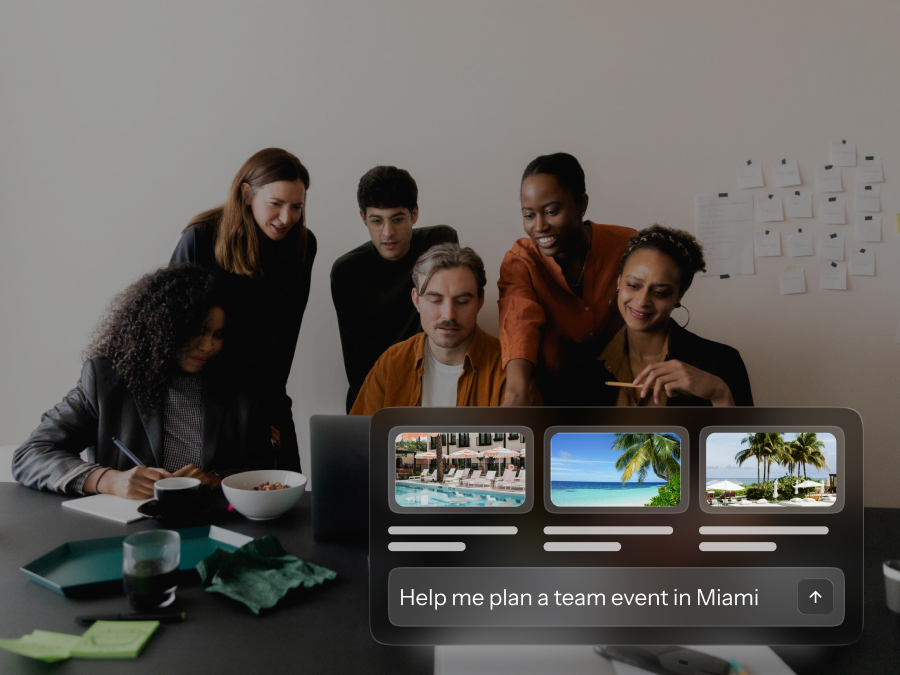
At BoomPop, we’ve built a tool you can simply chat with in plain English: “I need to plan a 500-person conference for next spring. The location should have mild weather, be within 30 minutes of a major airport, and avoid dates when other large events are happening.”
Within seconds, the AI crunches billions of data points and comes back with tailored recommendations, complete with cost ranges and availability snapshots.
This kind of optimization saves time, saves money, and spares planners from the dreaded spreadsheet rabbit hole.

How does AI handle personalization for attendees, and what impact does that have on engagement or satisfaction?
Personalization is where AI shines brightest, because every guest wants to feel seen, supported, and included.
At BoomPop, we’ve built an AI Concierge that attendees can text 24/7 with questions like:
- What should I pack for this trip?
- What is the weather going to be?
- What is on tomorrow’s agenda?
- What is the exact address of the venue?
For organizers, the AI Concierge can handle tasks like:
- “Please text all attendees that the shuttle has arrived.”
- “Send me a list of everyone with food allergies.”
- “Remind everyone in the morning to pack a rain jacket.”
Because it all happens over text message, there’s no app to download and no login required. We meet people where they already are (on their phones).
The result is that organizers offload 95% of attendee questions and can focus on the creative side of planning instead of logistics. Guests love it because they get instant, accurate answers without hunting for an agenda or chasing down an organizer.
In short: organizers get efficiency, guests get clarity, and everyone gets a better experience with far fewer frantic midnight emails.
What are the potential risks or limitations of relying on AI in event planning, and how can planners mitigate them?
AI isn’t flawless. Like any technology, it can make mistakes, misinterpret requests, or hallucinate information. If the data feeding the system is incomplete or inaccurate, the output will reflect that. And while AI is great at streamlining decisions, it does not replace human judgment, intuition, or the creative “feel” of an event.
The key is to treat AI as a partner, not a replacement. Planners should spot-check outputs, provide clear guardrails, and avoid outsourcing critical decisions. Think of it like a junior teammate. AI can handle a lot of the grunt work, but you are still the one responsible for quality control.
Another limitation is trust. Attendees and clients want to feel reassured that their experience is being thoughtfully managed, not outsourced entirely to an algorithm. That is why we build transparency into the process. AI handles the logistics, but humans still curate the vision.
After all, no one ever said, “My favorite part of that event was the flawless algorithm.”
Looking ahead, how do you see AI evolving in this space over the next 5–10 years?
We are on the cusp of a major shift. In the next five years, AI literacy will be table stakes for every professional in events. Planners who embrace AI will move faster, run smoother operations, and deliver more personalized experiences. Planners who resist will find themselves outpaced.
We see every planner eventually having their own AI assistant. It will act as a co-pilot that remembers past events, suggests optimizations, and automates execution in real time. Imagine an AI whispering in your ear on-site: “The shuttle is five minutes late, but I have already texted attendees and updated the agenda.” That’s where we are headed.
The one area AI will not disrupt soon is the on-site human magic. The improvisation, empathy, and problem-solving that only seasoned planners can deliver will remain essential. Unless we start sending robots to chase down lost catering trays, event-day execution will remain distinctly human.

Start planning in 2 minutes or less
.avif)

.svg)