
Running the same event in Austin, Chicago, and New York sounds like a copy-paste job.
But you and I both know it is NOT.
Each city needs its own vendors, its own hotel negotiations, and its own communication threads. A vendor with no prior relationship to you has no reason to prioritize you when something goes wrong - and nine days before an event in a city you have never worked in, that is a crisis.
Most event platforms are built for registration and engagement. Fewer are built for the sourcing and coordination work that multi-city events actually require.
This article breaks down ten platforms - BoomPop, Cvent, Bizzabo, Swoogo, Whova, EventMobi, Accelevents, vFairs, EventsAir, and Eventbrite - comparing their multi-city sourcing capabilities, full-service options, and pricing models.
What counts as a platform for multi-city in-person events?
A multi-city in-person event platform handles venue sourcing, vendor coordination, guest management, and logistics across multiple locations from a single system. Without one, each city becomes its own planning project with separate vendor relationships, hotel negotiations, and communication threads pulling in different directions.
Why do local logistics get messy so fast?
Running the same event in four cities sounds like a copy-paste job. It rarely is. Here is where things break down:
- No local vendor network: Every city requires sourcing caterers, AV teams, and venues from scratch, often without local knowledge or negotiated rates.
- Hotel room block surprises: Rates quoted during sourcing frequently differ from what appears at checkout, with F&B minimums and AV fees added later.
- Fragmented communication: Without a central system, guest questions, dietary restrictions, and RSVPs arrive across email, Slack, and spreadsheets simultaneously.
- No visibility across cities: Finance and leadership cannot see spend, attendance, or status across locations in one place.
- Vendor dropout risk: A vendor with no prior relationship has no accountability, and a dropout nine days before the event in a city you have never worked in is a genuine crisis.
What should you look for in a multi-city event platform?
Your vendor list from last year's offsite does not transfer to a new city. The difference between a registration tool and a logistics platform shows up the moment you need to source a venue somewhere you have no existing relationships.
Venue and hotel sourcing across cities
The platform should have an existing vendor and hotel network that spans dozens or hundreds of cities across target regions, not just a search tool that surfaces random results. Pre-negotiated rates eliminate the surprise invoice problem that happens when a venue quotes one price during sourcing and bills another after the event. BoomPop's network of 1M+ vendor partners and hotel discounts of up to 40% represent what a real sourcing network looks like in practice.
Local vendor coverage and onsite support
A platform that only handles registration and communication but leaves local vendor coordination to the planner has not solved the sourcing and vendor management problem that causes 60+ hours of extra work per multi-city event. The right platform either has vetted local vendors in each city or provides a planning team that manages those relationships on your behalf. Self-serve sourcing tools work for teams with 10+ hours per city to dedicate to vendor outreach, while full-service support fits teams with limited bandwidth - you need to know which one you are getting before you commit.
Guest communication and attendee management
Multi-city events can double or triple the volume of guest questions about travel logistics, hotel check-in details, and agenda changes. AI-powered guest messaging handles common questions automatically, reducing the planner's inbox load by handling 50-80% of routine inquiries. A platform with centralized guest communication gives attendees a single portal or app to access city-specific hotel details, agendas, and travel information regardless of which city they are attending.
Event approvals and budget visibility
For teams running events across multiple cities, finance and leadership need a single view of all event spend and status. A policy and approval workflow looks like this in practice:
- Employees submit event requests through a structured form
- Approvers review against budget policy
- Spend is tracked in one dashboard across every city and event
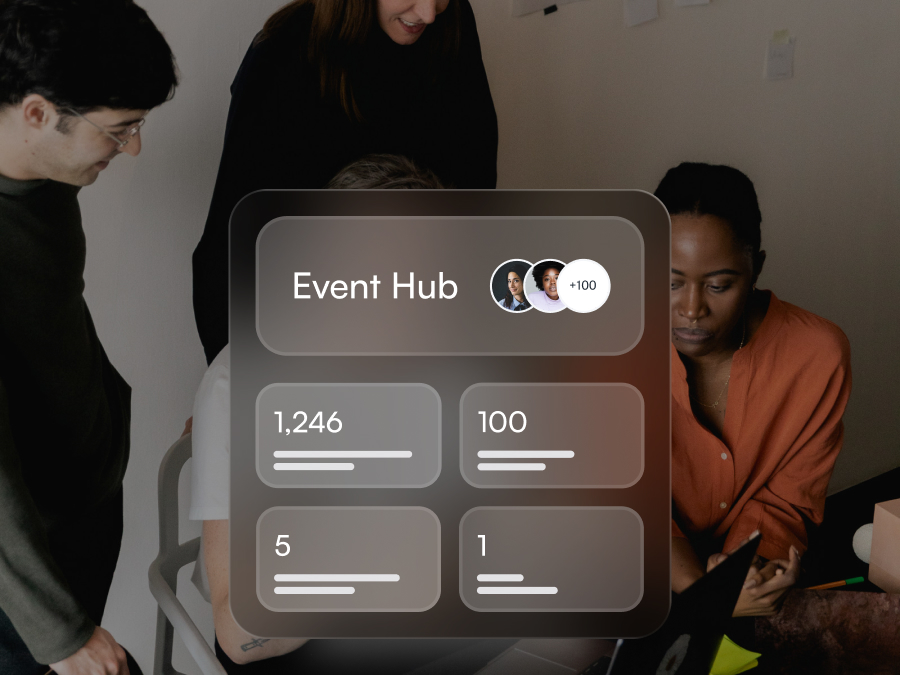
BoomPop's Company Event Hub and configurable approval workflows provide this capability, surfacing metrics like total attendees, destinations visited, budgets, and KPIs across all events.
Reporting across every city and event
Post-event reporting should not require the 4-8 hours typically spent manually pulling data from each city's vendor invoices and attendance sheets. A platform should surface attendee counts, budget actuals, and KPIs across all events in one place, without requiring manual data consolidation after the fact.
What are the top platforms for in-person events across cities?
Most event platforms are built for registration, engagement, and analytics. Fewer are built to handle the operational reality of running the same offsite in Austin, Chicago, and New York without rebuilding your vendor list each time.
BoomPop
BoomPop is built specifically for corporate offsites, retreats, SKOs, client events, and conferences, with both self-serve and full-service planning options in the same platform. The vendor network covers 1M+ partners with hotel discounts up to 40%, and AI-powered guest messaging handles repetitive attendee questions automatically. The Company Event Hub gives finance and leadership visibility across all events, with metrics on attendees, destinations, budgets, and KPIs. Organizations including Google, Salesforce, Shopify, and Amazon use BoomPop. Planners can hand off entirely or stay in control depending on their bandwidth - most platforms in this category offer only one model, not both.
Cvent for enterprise conferences
Cvent is the enterprise standard for large-scale corporate events and conferences, with venue sourcing via the Cvent Supplier Network, room block management through Passkey, registration, onsite check-in, and compliance reporting. The 4-8 week implementation timeline and enterprise-level training requirements make it a poor fit for a lean team running a quick multi-city offsite. Even with CSN and Passkey, Cvent is fundamentally a platform and marketplace tooling, not an end-to-end service for multi-city offsite execution.
Bizzabo for marketing-led events
Bizzabo is built for marketing teams running conferences and demand-generation events where attendee engagement data and ROI reporting matter most. Onsite services focus on event tech operations like badging and production, not local procurement. Teams running multi-city offsites typically need local vendor sourcing and standardized execution across locations, which sits outside Bizzabo's core positioning.
Swoogo for registration-heavy programs
Swoogo excels at building registration flows, event websites, and marketing automation for events, with per-user annual pricing and no transaction fees. Good for teams that already have local vendor relationships and just need registration flows, event websites, and automated email sequences. It does not solve the local sourcing or vendor coordination problem on its own.
Whova for attendee engagement
Whova is known for its attendee-facing app with networking tools, agendas, community boards, and live polls, with quote-based pricing. Strong for conferences with 500+ attendees where networking, live polling, and community engagement are priorities, though multi-city offsites typically need vendor sourcing and contracting per city, which Whova is not positioned to handle.
EventMobi for mobile event apps
EventMobi is a mobile-first platform focused on branded apps, session schedules, push notifications, and engagement tools, with badge printing starting at $3.99 per badge and hardware rental packages starting at $1,000. Hotel workflow can collect selections but does not process hotel booking payments during registration. Backend operational depth for multi-city sourcing and vendor management is limited - the platform does not include vendor databases, contract management, or multi-city procurement workflows.
Accelevents for hybrid and in-person programs
Accelevents is built around a unified data model for registration, check-in, and onsite execution, with per-ticket fees of $1.50 plus 3.5% on some plans. Strong for teams that need unified attendee records, check-in data, and engagement metrics across multiple events and formats, though multi-city offsites typically want centralized procurement and multi-city vendor operations rather than per-ticket economics.
vFairs for expos and hybrid events
vFairs specializes in trade show and expo formats, with strong exhibitor management and virtual environment tools, requiring an annual license with no free plan. Good for hybrid events with exhibitor booths, lead capture, and virtual attendance portals where both onsite and digital audiences need to be managed. The onsite logistics toolset lacks venue sourcing, activity vendor coordination, and team-building program management needed for the offsite and retreat use case.
EventsAir for large event teams
EventsAir is a comprehensive platform with over 30 years in the market, built for associations and large event management teams. The Accommodation Module handles room block setup, bookings, monitoring, releases, and communications, and Event Success Services can configure hotel booking options with inventory and dynamic pricing. Best for dedicated event professionals managing conferences with 1,000+ attendees and multi-track agendas, not optimized for teams under 3 people or self-serve offsite planning.
Eventbrite for simple ticketed events
Eventbrite is the go-to for public-facing, ticketed events where discoverability and fast setup matter, with fees of 3.7% plus $1.79 per sold ticket and 2.9% of the total order for payment processing. Corporate offsites and SKOs are rarely sell-tickets use cases, and Eventbrite does not address local sourcing, contracting, or multi-city run-of-show execution.
Which platform fits your event program?
The event type you are running determines which platform gap will hurt you first: offsites expose sourcing gaps, conferences expose registration gaps, and client events expose guest communication gaps.
Offsites and retreats
For teams running company offsites, team retreats, or executive retreats across cities, the primary needs are venue sourcing, hotel room blocks, local activity vendors, and guest logistics. Offsite venues require 2-3x more sourcing time than conference hotels because unique properties have less standardized booking processes, and a venue that looks perfect on a website can have hidden F&B minimums of $10,000+, limited AV capabilities, or restrictive cancellation policies that only surface during contracting. BoomPop's full-service and self-serve options are built for exactly this use case, with a vendor network and pre-negotiated hotel rates that address the sourcing problem directly.
Field marketing and client events
For marketing and sales teams running client dinners, field events, or roadshow-style programs across multiple cities, the key need is repeatable execution: the same quality experience in Austin, Chicago, and New York without rebuilding the vendor list each time. A confused guest at an internal offsite is a minor inconvenience; a confused prospect at a client dinner is a lost deal. AI guest messaging is especially useful here because a confused prospect at a client dinner can derail a $50,000+ deal, making response time and accuracy critical.
SKOs, conferences, and sales meetings
For sales kickoffs and internal conferences where hundreds of employees converge in one city, the priorities shift to hotel room blocks, AV, F&B, and agenda management at scale. A $200,000 SKO budget requires a different approval process than a $5,000 team dinner, and the approval and policy workflow is particularly useful here because SKOs often involve finance scrutiny and exec visibility.
Trade shows and hybrid extensions
For teams adding a trade show presence or extending an in-person event with a virtual component, platforms like vFairs and Accelevents are better suited. Trade shows prioritize exhibitor management, lead capture, and booth logistics, while offsites prioritize venue experience, team activities, and seamless guest logistics. Knowing which category your event falls into before selecting a platform saves a painful mid-program switch.
How do you avoid local logistics headaches?
Different teams in different cities planning events through email, Slack, and their own spreadsheets creates duplicate vendor outreach, inconsistent pricing, and budget blind spots before the first venue is sourced. Four concrete actions reduce that risk regardless of which platform you choose:
- Start with one intake and approval process: A single intake form and approval workflow eliminates the 3-5 separate email threads and spreadsheets that typically emerge when multiple teams plan events independently.
- Source venues before you pick a city: The best multi-city event programs let venue availability and pricing inform city selection, not the other way around.
- Give guests one place for answers: Guest questions multiply fast across multi-city events with different hotels, different agendas, and different local logistics.
- Build a backup plan before show day: In cities where the planner has no existing vendor relationships, a vendor dropout is a genuine emergency.
Start with one intake and approval process
A single intake form and approval workflow eliminates the 3-5 separate email threads and spreadsheets that typically emerge when multiple teams plan events independently. When a VP of Sales submits an SKO request through a structured form, finance can see the budget, headcount, and business justification in one place instead of piecing it together from email threads. BoomPop's event request system provides this centralized intake with configurable approvers and policy enforcement built in.
Source venues before you pick a city
The best multi-city event programs let venue availability and pricing inform city selection, not the other way around. A platform with a real sourcing network can surface options across cities simultaneously, so you are not locked into a location before knowing whether the right venue exists there. This matters most for offsites and retreats where attendees spend 8-12 hours per day at the venue, making location, amenities, and atmosphere central to the event's success.
Give guests one place for answers
Guest questions multiply fast across multi-city events with different hotels, different agendas, and different local logistics. AI-powered guest messaging handles the repetitive questions about check-in times, dinner locations, and dress codes so the planner can focus on vendor negotiations, agenda changes, and executive requests that require judgment. A guest asking what time check-in opens does not need a human response; a guest asking whether they can bring a partner to the dinner might.
Build a backup plan before show day
In cities where the planner has no existing vendor relationships, a vendor dropout is a genuine emergency. Specific scenarios that require a backup plan:
- Catering no-shows within 48 hours of the event
- AV failures with no local technician on call
- Hotel room block errors discovered at check-in
The right platform either has 2-3 backup vendor options per category built into its network or provides a planning team that identifies and pre-qualifies backup vendors 2+ weeks before the event.
How do you choose the right platform?
Most platforms show similar registration flows, dashboards, and reporting interfaces in a demo. The differences in sourcing depth, vendor network size, and support responsiveness show up during execution when you need a venue in a city you have never worked in or when a vendor drops out three days before the event.
Test the multi-city sourcing process
Ask any platform vendor to walk through how they would source a venue in a city you have never worked in. A platform with a vendor network of 100,000+ partners will have a specific answer with named venues, rate ranges, and availability timelines. A platform that relies on you to source your own vendors and just manages registration, communication, and reporting is a different product - one that saves 10-20 hours per event on admin but not the 40+ hours on sourcing - and you need to know which one you are evaluating.
Check support before the event week
Ask specifically: who handles issues on the day of the event, what is the response time, and is there a dedicated contact or a support queue. A support ticket that routes to a random agent with 4-24 hour response times on event day is not the same as a dedicated planner who knows your event details and responds within 15 minutes. BoomPop's model keeps the same team involved from planning through execution, which addresses the handoff failures and context loss that cause vendor miscommunications and day-of emergencies.
Compare platform cost against DIY hours
The invisible cost of DIY multi-city event planning includes planner hours, opportunity cost, and stress that rarely appear in budget spreadsheets. A planner spending 60 hours sourcing hotels and vendors for a four-city offsite at a $75 hourly rate is a $4,500 hidden cost before a single vendor is booked. BoomPop's hotel discounts of up to 40% often cover the platform cost entirely, which reframes the conversation from whether the platform is worth it to what it actually costs to go without one.
Review integrations, reporting, and data access
Look for:
- HRIS and Slack integrations: So event requests and approvals fit into existing workflows
- Expense management and CRM connections: So post-event spend data does not require manual export
- Finance-accessible reporting dashboards: So leadership can pull post-event data without routing through the event planner
A platform that traps data in its own system creates 2-4 hours of manual export and reformatting work downstream, particularly when finance asks for a post-event spend report across four cities.
FAQs
How much do multi-city in-person event platforms cost?
Pricing ranges from $500 per event to $50,000+ annually depending on model: some charge per event, some per user seat, some per attendee, and some offer flat annual pricing. BoomPop offers both self-serve and full-service options, with software starting at $499 per event or $1,000 per month.
Do you need a local planner in every city?
Not if the platform has pre-vetted vendors in 50+ cities and dedicated planning support with local market knowledge in those cities. A platform with pre-vetted local vendors and a dedicated planning team eliminates the need for a local hire for offsites, retreats, and client events under 500 attendees.
What is the difference between event registration software and an event management platform?
Registration software handles sign-ups and ticketing. An event management platform covers the full lifecycle: sourcing, planning, guest communication, onsite execution, and post-event reporting.
When does full-service event support make more sense than self-serve?
Full-service makes sense when the planner is running their first multi-city event with 100+ attendees, when the budget exceeds $100,000 and executive visibility is high like an SKO or leadership offsite, or when the team does not have 40+ hours to manage execution alongside their day jobs. Self-serve fits teams with existing vendor relationships in target cities and proven sourcing workflows who need a platform to centralize registration, communication, and reporting.
What data should teams track across multi-city events?
Track total attendees per city, budget actuals versus estimates, hotel and vendor spend, and post-event attendee satisfaction. Having these metrics in a single dashboard before the debrief conversation saves 2-4 hours of manual data consolidation and lets planners answer executive questions immediately.
How early should teams start sourcing hotels and venues for multi-city events?
For multi-city programs, sourcing should begin 8-12 weeks out compared to 4-6 weeks for single-location events because availability and room block negotiation timelines vary by city and season. As a general rule, add 2 weeks to the sourcing timeline for each additional city and each 50 attendees above 100.
Ready to run events across cities without the chaos?
Multi-city event programs involve 3-5x more vendor relationships and communication threads than single-city events, and the right platform frees planners from the 10+ hours of day-of troubleshooting that derails their ability to be present at the event. BoomPop is built for exactly this: corporate events across cities, with vendor sourcing, guest management, approval workflows, and full-service support available when your team needs it.
Start planning in 2 minutes or less

.avif)

.svg)