
Team events are supposed to bring people together. For almost half of employees, they do the opposite.
A 2025 Leadership IQ study of 6,821 workers found that 48.5% say traditional "forced-fun" activities make them feel uncomfortable or inauthentic. The issue is not money. It is that most events are designed around what is easy to book, not what the team actually needs.
Good event design follows a few key principles that can be applied in under an hour of planning time. It just requires a few honest decisions before logistics take over.
This guide walks through how to make those decisions, and how BoomPop can handle the rest.
What Makes a Team Event Worth Attending?
Nearly half of employees, 48.5% according to a 2025 Leadership IQ study of 6,821 workers, say traditional "forced-fun" team-building activities make them feel uncomfortable or inauthentic. The problem is not the budget—the same Leadership IQ study found no correlation between event spending and employee satisfaction. It is the design.
What attendees remember most has nothing to do with how much was spent:
- Genuine connection: Moments where they learned something real about a colleague
- Low pressure: Activities where showing up was enough, no performance required
- Feeling valued: Evidence that someone thought about what they would actually enjoy
- Energy, not obligation: Leaving with more than they came in with
Why Do Most Team Events Miss the Mark?
The trust fall, the ropes course, the icebreaker that puts introverts on the spot. These activities persist because they are easy to book—often available with same-week scheduling—not because they create connection.
What Makes Team Events Feel Forced?
Common failure patterns include:
- One-size-fits-all activities: Assuming everyone wants the same thing
- Forced vulnerability: Icebreakers that put people on the spot in front of the group
- No clear reason to be there: Events with no stated purpose beyond "team building"
- Physical or social exclusions: Activities that unintentionally leave people out based on ability, personality type, or comfort level
What Makes People Want to Show Up?
Attendance energy is contagious in both directions—research from organizational psychologists shows that visible enthusiasm from early RSVPs increases overall participation rates by up to 20%. If a few people are dreading it, that spreads. If people are genuinely curious about what is planned, that spreads too.
What drives genuine excitement:
- Novelty: Something they would not do on their own or have not done before
- Input: They were asked what they wanted and someone listened
- Relevance: The event connects to something real about the team or company
- Optionality: They feel like they chose to come, not that they had to
How Do You Set the Right Goal Before Planning?
A clear goal shapes every downstream decision, from venue to format to activity type. Without it, you are guessing, and your attendees will feel that.
Who Is the Event For?
A 12-person engineering team and a 200-person all-hands require completely different approaches. Answer these questions before touching logistics:
- Team size: Intimate groups bond differently than large ones
- Team composition: New hires, long-tenured employees, cross-functional mix, remote vs. in-person ratio
- Relationship baseline: Are people strangers, familiar colleagues, or a tight-knit crew that needs a reset?
- Physical and dietary needs: Accessibility and food requirements should be surfaced early, not as an afterthought
What Should the Event Help Your Team Do?
This is not about writing a mission statement. It is about making one honest decision before planning starts.
Goal
What It Looks Like in Practice
Break the ice for new team members
Low-stakes, structured activities that do not require prior relationships
Rebuild morale after a hard stretch
Fun-first, low agenda, generous food and breaks
Deepen cross-functional relationships
Mixed-department small groups, shared challenges
Reward strong performance
Elevated experience, minimal work content
Align on strategy or culture
Balance of working sessions and social time
How Will You Measure Success?
Most planners get asked "was it worth it?" and have no good answer ready. Measuring success starts before the event, not after.
Metrics worth tracking:
- Attendee NPS: Would they recommend this event format to a colleague?
- Participation rate: What share of invited employees actually attended?
- Post-event qualitative feedback: What did people say they would change or repeat?
- Budget vs. actuals: Did the event come in at or under budget, a metric finance will ask about
How Do You Choose Team Building Activities Everyone Can Enjoy?
There is no single activity that works for every team. The goal is a thoughtful selection process, not a perfect activity. The best activities create natural conversation because people are focused on something together, not because they were told to bond.
Survey Your Team Before Planning Anything
An anonymous survey takes one hour to build using tools like Google Forms or Typeform and provides data that replaces guesswork with documented preferences. Ask:
- Activity preferences: Competitive vs. collaborative, indoor vs. outdoor, active vs. seated
- Comfort zones: What would make them uncomfortable, such as public performance or physical challenges
- Scheduling: Time of day, day of week, duration preferences
- Dietary and accessibility needs: Collect these now, not the week of the event
- Open field: "Is there anything you have always wanted to do as a team?"
Plan for Introverts, Extroverts, and Accessibility
Common team-building activities like karaoke, improv games, and large-group icebreakers favor extroverted participation styles, though introverts do not need to be excluded. They need structured, smaller-group moments where connection happens without performance pressure.
Design for the full range:
- Alternate large-group and small-group moments so introverts get breathing room
- Build in transition time because back-to-back activities drain people who need to process
- Offer meaningful non-participation roles like scorekeeper or photographer that keep people involved without forcing them into the spotlight
- Confirm physical accessibility of any venue or activity before booking
Make Participation Truly Optional
True optionality means alternative roles feel equally valuable, not like a consolation. When people feel they chose to participate, engagement increases—self-determination theory research shows autonomy is a key driver of intrinsic motivation.
What true optionality looks like:
- Alternative roles are named and framed as important, not as opt-outs
- No one is singled out for not participating in the main activity
- Multiple activity formats across the day give everyone at least one thing they would choose
Mix Collaboration and Friendly Competition
Pure competition can create friction among colleagues who must collaborate afterward. Pure collaboration can feel so low-stakes that people disengage, as seen when teams report 'going through the motions' in post-event surveys. The sweet spot is a shared challenge with room for both.
Activity formats that balance both:
- Team-based competitions: Departments or mixed groups compete, so individual pressure stays low
- Collaborative problem-solving: Escape rooms, scavenger hunts, build challenges
- Creative challenges: Cooking classes, improv workshops, trivia, where winning is secondary to the experience
How Do You Plan the Team Event Logistics?
A great activity concept falls apart without solid logistics—missed catering orders, venue double-bookings, and transportation delays are among the top complaints in post-event feedback. The operational decisions below determine whether the day actually runs smoothly.
Set Your Timeline, Date, and Budget
Average cost per attendee per day for meetings and events rose from $162 in 2024 to $168 in 2025, with $172 forecast for 2026, according to CWT and GBTA. Avoid scheduling during major deadline periods, end-of-quarter crunches, or dates that conflict with key stakeholders.
Budget line items to account for upfront:
- Venue rental or off-site space
- Food and beverage, including F&B minimums that often catch planners off guard
- Transportation or travel coordination
- Activity or vendor fees
- AV and equipment
- Contingency buffer for last-minute changes
Choose a Venue That Supports Your Goals
An off-site venue signals that this event is different from a regular workday—event planners report higher attendee engagement scores for off-site versus on-site events. Planners engage with up to 16 venues simultaneously through one RFP, according to FCM Travel data, and 60% of venue sourcing happens within six months of the event, meaning timelines are compressed by default.
Look for:
- Flexible layout: Can the space accommodate both large-group and breakout formats?
- Catering options: Does the venue handle food and beverage, or do you need to source separately?
- AV and tech: Is equipment included, or will there be scope creep on AV costs?
- Location and transport: Can your team get there without a logistical nightmare?
- Outdoor space: Even a break area outside adds energy to a full-day indoor event
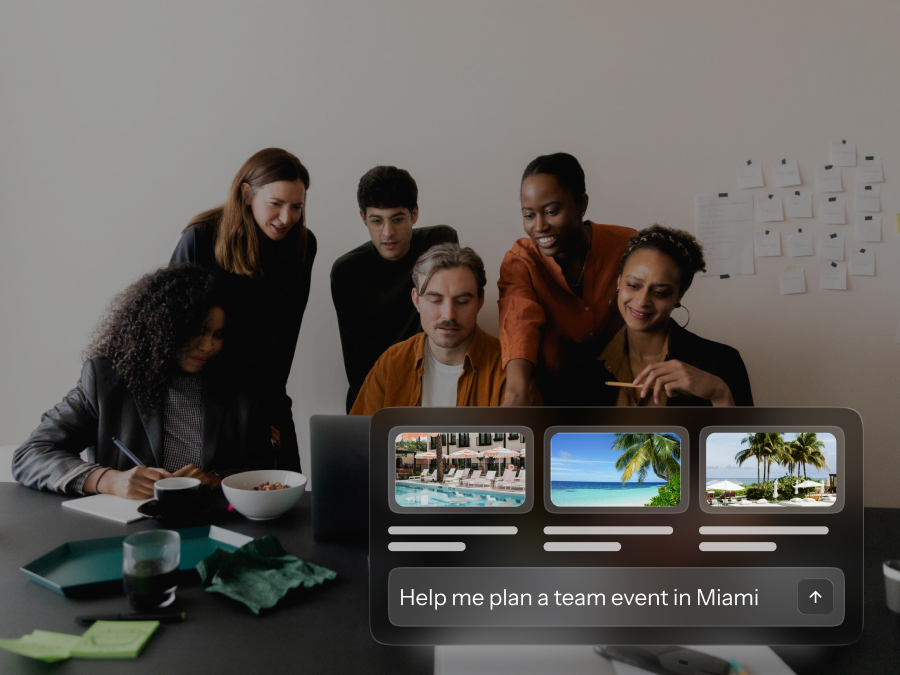
BoomPop's venue sourcing covers 1M+ vendor partners and can surface options with pre-negotiated rates, which matters most for planners who do not have an existing vendor network.
Plan Food, Breaks, and Accessibility
A bad catering situation generates complaints that outlast any great activity—food-related issues consistently rank in the top three negative feedback themes in post-event surveys. Collect dietary restrictions before finalizing catering, build in at least one unstructured break per half-day of programming, and treat any meal period as a moment for connection rather than just fuel.
Build an Agenda That Flows
White space in the agenda is a feature, not a gap—aim for 15 to 20 minutes of unstructured time per two hours of programming. A strong structure looks like this:
- Opening: A warm welcome that sets the tone, not a 20-slide deck
- Icebreaker or low-stakes activity: Gets people talking before the main programming
- Main activity or experience: The centerpiece of the day
- Meal or shared break: Unstructured connection time
- Closing: A moment of reflection, recognition, or shared celebration
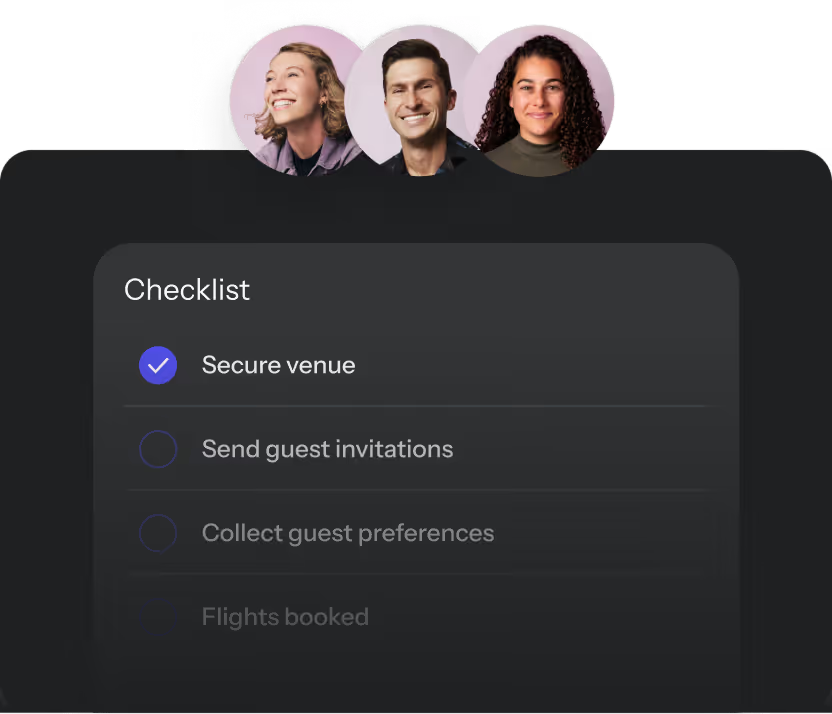
BoomPop's platform includes itinerary-building tools and AI-powered guest messaging that help planners share the agenda with attendees and answer questions automatically, reducing day-of coordination load.
How Do You Build Excitement Before the Event?
The event experience starts the moment people hear about it—first impressions from the announcement influence whether attendance feels like an opportunity or an obligation. How you communicate shapes whether people show up curious or skeptical.
Give People a Clear Reason to Attend
"Mandatory fun" is an oxymoron—the 48.5% discomfort rate from the Leadership IQ study correlates strongly with events framed as required attendance. Even if attendance is expected, lead with what is in it for the attendee, not the business objective.
Communicate in your first announcement:
- What the event is, including format, vibe, and what to expect
- Why this specific event was chosen, ideally referencing team input
- What they will need, such as dress code or travel details
- What they do not need to do, like prep work or presentations
Share Updates in the Right Channels
Not everyone reads email—average corporate email open rates hover around 20 to 25%. Multi-channel communication across Slack, email, and calendar invites ensures the message actually lands, while teasing details over time builds anticipation rather than overwhelming people with one information dump.
A communication cadence that builds anticipation:
- Initial announcement: Date, format, and high-level what to expect
- 2 weeks out: Activity details, logistics, what to bring
- Week of: Final reminders and any last-minute updates
- Day before: A short "we are excited to see you tomorrow" message
BoomPop's AI-powered guest messaging automatically answers attendee questions and sends updates, eliminating the back-and-forth that typically eats up a planner's time in the weeks before an event.
Invite Employees Into the Planning Process
When people feel like they helped shape the event, they arrive invested rather than skeptical—teams that run pre-event surveys report 15 to 25% higher satisfaction scores. Strategic inclusion at the right moments, not design-by-committee, is what makes the difference.
Ways to involve the team without losing control of the plan:
- Run a pre-event survey and reference it when announcing the event
- Open a small planning committee to volunteers
- Ask for input on specific decisions like theme or food preferences, not the full plan
- Share the reasoning behind final choices so people feel heard even if their first preference was not selected
How Do You Keep the Energy Going After the Event?
What happens in the 48 hours after the event determines whether the connections made carry into the workplace or evaporate—follow-up actions during this window correlate with sustained cross-team collaboration.
Build in Natural Conversation Opportunities
Mix seating and team assignments so people interact with colleagues they do not normally work with. A shared artifact from the event, like a photo wall, a collaborative output, or a playlist, keeps the memory alive after everyone goes home.
Collect Feedback While It Is Fresh
Post-event feedback is most accurate when collected within 24 to 48 hours. A short survey of three to five questions captures what worked and what to change before memories fade. BoomPop's platform includes built-in post-event survey tools that make this easy to send and analyze without additional setup.
What to ask:
- What was the highlight of the event?
- Was there anything that felt uncomfortable or did not land?
- What would you want to do again?
- What would you change?
- Would you recommend this event format to another team?
Turn Wins Into the Next Event Plan
Great events compound—teams that document and iterate on event formats report 20 to 30% reductions in planning time for subsequent events. Planners who document what worked build a repeatable playbook that makes future events faster and better. BoomPop's Company Event Hub surfaces visibility into past events, budgets, attendee counts, and KPIs in one place, so institutional knowledge does not live in a single person's inbox.
What to document after every event:
- Vendor performance
- Budget actuals vs. estimates
- Attendee feedback themes
- Activities that generated the most energy
- What you would do differently
Frequently Asked Questions
What Are the Five C's of Event Planning?
The five C's of event planning are concept, coordination, control, culmination, and closeout. Each stage has its own set of decisions and deliverables, and skipping any one of them frequently leads to day-of problems like unclear objectives, budget overruns, or logistical gaps.
What Are the Five P's of Event Planning?
The five P's are purpose, people, place, process, and promotion. Together they ensure you have addressed why the event exists, who it is for, where it is happening, how it runs, and how you will communicate it to attendees.
What Are the Seven Stages of Event Planning?
The seven stages are: define your goal, set your budget, choose a date and venue, plan the agenda and activities, communicate with attendees, execute the event, and collect post-event feedback. Event failures frequently trace back to skipping or rushing one of the early stages—particularly goal-setting and budgeting.
How Far in Advance Should You Plan a Team Event?
Smaller gatherings of under 50 people can come together in four to six weeks, while larger events with travel, hotel blocks, or multi-day programming typically need three to six months of runway.
What If Employees Do Not Want to Participate in Team Building Activities?
Resistance usually signals that past events were not designed with the team in mind—the 48.5% discomfort rate from Leadership IQ suggests the issue is event design, not a lack of desire for connection. Surveying your team before planning, offering genuinely optional participation, and choosing activities with low social pressure are the most effective ways to shift that dynamic.
How Can You Tell Whether a Team Event Worked?
The clearest signals are attendee NPS, participation rate, and qualitative feedback collected within 48 hours. Softer indicators, like whether people reference the event in conversation afterward or whether cross-functional relationships visibly improved, are equally telling.
When Should You Use an Event Planning Partner?
A planning partner makes the most sense when the event is large or complex, when the planner is managing logistics on top of a full-time role, or when leadership expects a high-quality experience without a proportional increase in planning resources. BoomPop combines expert human planners with a technology platform that handles sourcing, guest management, itineraries, and vendor coordination.
Start Planning in Two Minutes or Less
Great team events do not require starting from scratch—templates, pre-vetted vendors, and documented playbooks from past events reduce planning time significantly. BoomPop handles the logistics so the planner can focus on the parts that matter.
Get started for free
Start planning in 2 minutes or less
.avif)

.svg)