
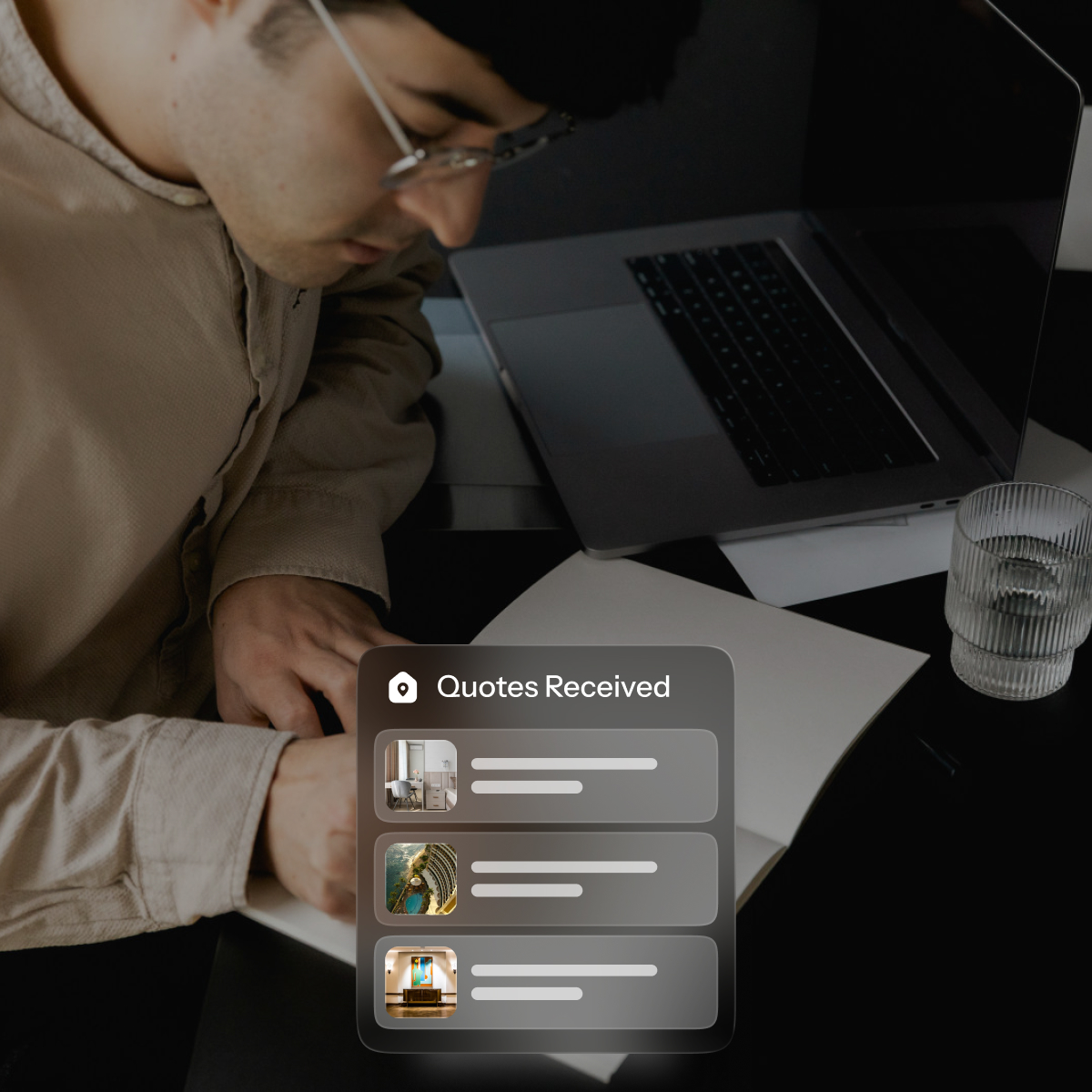
Adding 20 people to an event feel is a small ask... until the invoice arrives.
The headcount changed.
The budget didn't.
And now you're explaining to finance why ordering 20 extra welcome kits after the vendor already packed the original batch cost almost as much as the first hundred.
Event costs don't scale the way most people expect. T
hey jump at thresholds, hide in service charges, and compound in ways that only become visible after contracts are signed.
This guide breaks down where the surprises come from and how to build the structure, forecasting, sourcing, and guardrails, that keeps BoomPop's Event Management Platform teams ahead of them instead of reacting to them.
Why do event budgets grow faster than headcount?
Add 20% more attendees and your budget can jump 40% or more. The reason is that event costs are structured in tiers, thresholds, and hidden multipliers that have nothing to do with linear scaling.
Some costs rise with every person. Others jump when you cross a venue capacity line. The most dangerous ones hide until the invoice arrives.
Which costs rise with every attendee?
Per-person costs are the easiest to forecast. Food and beverage catering is the most obvious: each additional attendee adds a plate, a drink ticket, and a dessert to the final bill. Hotel room nights follow the same pattern, though the rate you negotiated for your original block may not apply to late additions.
Swag and printed materials are messier. Ordering five extra welcome kits after the vendor has already printed and packed the original batch can double the unit cost because you are paying for a second production run. Ground transportation follows seat-based pricing, so adding attendees can push you from one charter bus to two.
Which costs jump at venue thresholds?
Moving from 80 to 100 attendees often requires a larger ballroom, and the larger room carries a higher rental fee regardless of whether you fill every seat. AV and production costs scale with room size and equipment count: more attendees means more microphones, a larger screen, and additional lighting rigs priced by the piece.
Staffing minimums create another threshold. Venues and caterers typically require one server per a set number of guests, so crossing that ratio adds a fixed labor cost even if you only added three people. Breakout space follows the same logic: adding attendees can push you past the point where one room works, forcing you to book a second space at additional cost.
Which costs hide until invoices arrive?
Hotels often require a minimum spend on catering regardless of actual consumption, and adding attendees late can push you into a higher minimum tier without warning. Service charges and gratuity are typically added as a percentage on top of F&B and venue fees, so they grow automatically as other costs rise.
AV exclusivity clauses are a common trap. Some venues require you to use their in-house AV vendor, and in-house AV carries a structural 30 to 50% markup baked in to fund venue commissions. Attrition penalties are the final hidden cost: if your room block contract requires you to fill a set number of rooms and attendees drop out, you may owe the hotel for empty rooms based on a multiplier formula, commonly pegged to 75 to 80% of the room rate applied to the shortfall below an 80% pickup threshold.
How should you forecast event spend before headcount is confirmed?
Your budget gets approved based on one number, and then leadership adds 15 people "just to be safe." A single budget number is a liability when headcount is uncertain. The better approach is to build three versions before anyone asks for one, so you control the conversation instead of reacting to it.
The foundation of all three scenarios is a per-person baseline built from real line items, not a top-down estimate.
Set a per-person baseline
Variable costs like food and beverage, hotel rooms, ground transport, and materials get divided by expected attendees to produce a per-person rate. Fixed costs like venue rental, AV packages, and event management fees get tracked separately because they do not scale with attendance.
Dividing fixed costs across attendees in your working model creates a misleading per-person rate that breaks the moment headcount changes. Keep the two buckets separate from the start.
Build low, target, and high headcount scenarios
Three budget scenarios give you a number ready for every version of the conversation:
- Low scenario: Minimum confirmed attendees. Use this as the floor for any contract minimums or room block commitments.
- Target scenario: Expected attendance. This is the working budget you plan and staff against.
- High scenario: Maximum realistic attendance. This is the ceiling that triggers a conversation with the venue about capacity and a conversation with finance about additional approval.
Having all three numbers ready before leadership asks means you are presenting options, not defending a single estimate that may already be wrong.
Add contingency before approval
A standard contingency range for corporate events sits between 10% and 15% of total projected spend, with higher percentages appropriate for events with uncertain headcount or complex logistics. Contingency covers late RSVPs that push you into a new venue tier, last-minute AV additions, and attrition penalties on room blocks.
Present contingency to finance as a named line item. It is easier to return unused contingency than to explain a budget overage after the event ends.
What guardrails keep event budgets under control?
Forecasting protects the budget before approval. Guardrails protect it during execution, when the pressure to say yes to small changes creates budget drift. The most effective guardrails remove discretion from individual decisions: approval tiers, RSVP deadlines, and standardized defaults for major cost categories.
Set approval tiers by event size
Without a tiered system, every event competes for the same approval bandwidth, which slows everything down and creates pressure to skip the process entirely. A tiered structure matches the approval effort to the financial risk:
- Small events under a set attendee threshold: self-serve request and approval within a defined budget envelope, no senior sign-off required
- Mid-size events: manager or department head approval with a standard budget template
- Large or high-cost events: finance and senior leadership approval with full scenario modeling
Lock RSVP and change deadlines
A hard RSVP deadline should be tied to the venue's room block release date, typically 30 days before the event for mid-size groups. A separate "no change" deadline freezes headcount for catering and logistics purposes, typically 10 to 14 days before the event.
Both deadlines should be communicated to attendees and stakeholders before planning begins. Late additions after the freeze should require explicit budget approval, not just a quick Slack message.
Standardize room blocks, F&B, travel, and AV
Ad hoc decisions on major cost categories are where budget discipline breaks down. Standardization means:
- F&B: Define a per-person spend range by event type (working lunch vs. dinner reception vs. multi-day offsite) and use it as the default, with deviations requiring sign-off
- Room blocks: Establish a standard approach covering number of nights, star rating, and room type so every planner starts from the same baseline
- Travel: Set a policy that defines whether the company covers flights, ground transport, and incidentals, and at what class of service
- AV: Create a default package for each event size rather than scoping AV from scratch each time
How can sourcing protect the event experience without blowing the budget?
Sourcing strategy is a budget lever, not an administrative task. The difference between sending a formal Request for Proposal to multiple venues and calling your favorite hotel contact is often 10 to 30% in cost savings. Buying smarter does not mean cutting quality: it means creating competitive pressure and negotiating the right terms before contracts are signed.
The two largest variable costs, rooms and food, are also the two most negotiable, but only before you sign.
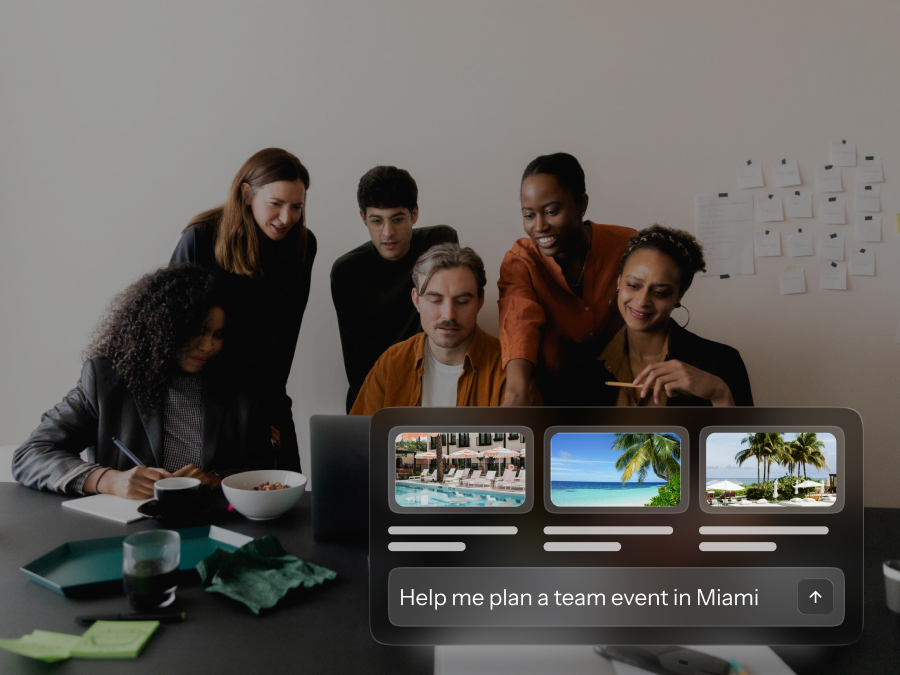
Compare venues with one RFP
A Request for Proposal is a structured document sent to multiple venues simultaneously. Key elements to include:
- Your event requirements and specifications
- Expected attendee count and date ranges
- Budget parameters
- Response deadline
It forces venues to respond to the same requirements, making proposals directly comparable. Sending to multiple venues at once signals that you have alternatives, which is the primary lever for negotiating rate reductions.
Planners who source venues informally through phone calls and personal relationships consistently pay more because they have no comparison point. A structured RFP process is where planners report 10 to 30% cost savings versus ad hoc outreach.
Negotiate room blocks and F&B minimums early
Room block rates are almost always negotiable, with typical discounts of 10 to 20% achievable for mid-week dates or secondary city destinations. Ask for a rate cap that holds even if you add rooms later, which protects you from price increases when headcount grows.
F&B minimums can sometimes be restructured: converting a per-person minimum (e.g., $75 per person) to a total spend minimum (e.g., $7,500 for the event) gives you more flexibility on menu selection. Request attrition flexibility before signing, not after. Hotels will often agree to an 80% pickup threshold when asked early in the contracting process.
Use flexible dates and destinations
Off-peak dates, Tuesday through Thursday arrivals and dates that avoid major holidays and local events, can reduce hotel room rates by 15 to 30% compared to peak weekend pricing. Secondary cities like Austin, Nashville, or Denver typically offer 20 to 40% lower room rates, lower F&B minimums, and more venue availability than major metros like New York or San Francisco.
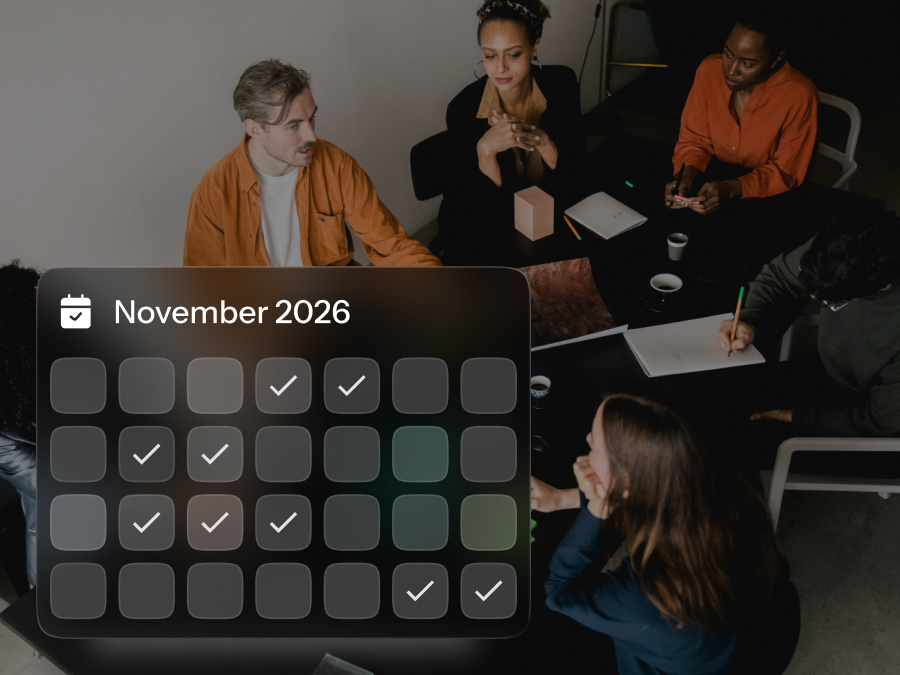
Presenting two or three possible date windows instead of one fixed date gives venues a reason to offer 5 to 15% better rates to secure the booking.
How can technology help lean event teams manage budget at scale?
When you are running multiple events across a growing organization, the spreadsheet stops working. Budget visibility is only as good as the last manual update, and variance management often happens after commitments are already made.
Technology makes the guardrails from the previous section actually enforceable.
Centralize budgets and KPIs across all events
When each team manages its own event budget in isolation, finance cannot see whether the company is over- or under-investing in events overall - a gap that commonly leads to 10 to 25% budget variance across departments. Planners cannot learn from past events because there is no shared record of what was spent and what it produced.
A centralized event hub gives the entire organization a single view of past, live, and upcoming events, including budgets, attendee counts, destinations, and KPIs. BoomPop's Event Management Platform provides a Company Event Hub that surfaces visibility into all events along with metrics like total attendees, number of events, budgets, and performance indicators, giving finance and leadership the full portfolio view needed to make informed decisions about event spend.
Automate guest questions and headcount updates
As headcount grows, so does the volume of attendee questions. Manual guest communication is one of the largest hidden time costs in event planning: it does not show up in the budget but it consumes the planner's capacity to focus on logistics and budget decisions.
AI-powered messaging tools handle routine guest questions automatically, freeing the planner to focus on budget management. BoomPop's AI Event Assistant answers guest questions instantly via SMS or Slack, and automated headcount tracking feeds RSVPs directly into a live count that updates the working budget, removing the lag between guest list changes and budget implications.
Track ROI after every event
Post-event measurement turns a one-time event into a data point that strengthens the next budget request. Key metrics to track after every event:
- Budget variance: Actual spend vs. approved budget, broken down by cost category, to identify where overruns consistently happen
- Cost per attendee: Total event cost divided by actual attendees, the most useful number for comparing events of different sizes
- Attendee engagement: NPS, session attendance, or satisfaction scores, the metrics that justify the investment to leadership
Planners who track these numbers after every event are in a fundamentally stronger position when asking for budget the next time. They are not asking for money: they are showing a track record.
How do you justify the event budget to leadership?
The most common objection to event spend is "we can do this ourselves." The response is to make the invisible cost of DIY visible. Translating event spend into business outcomes is not about defending a line item: it is about showing what the alternative actually costs.
Show the hidden cost of DIY planning
The question is not whether the event costs money. It is whether the company's time is better spent on event logistics or on the work those people were hired to do.
Even with technology, planners spend meaningful time per event: approximately 60% spending up to 5 hours using tools, with 25 to 30% spending 6 to 10 hours. DIY fragmentation pushes time up, not down.
Connect spend to attendance and engagement
A high cost-per-attendee number is not automatically bad. It becomes bad when attendance is low or satisfaction is poor. Presenting cost-per-attendee alongside an attendee NPS score reframes the conversation from "this was expensive" to "this was worth it per person."
Comparing across events over time shows whether cost-per-attendee has stayed flat or decreased while satisfaction has increased, which is a compelling story for finance.
Report budget variance after every event
Variance reporting, documenting where actual spend differed from approved budget and why, builds credibility with finance by demonstrating that the planner tracks money carefully. It also creates a feedback loop that improves forecast accuracy over time: if F&B consistently runs over, the baseline estimate needs to change.
A simple one-page budget summary sent to finance within two weeks of every event is more valuable than any pitch deck prepared before the event.
FAQ
What contingency percentage is safe when the guest list is still changing?
A standard contingency of 10% to 15% of total projected spend is appropriate for most corporate events. If headcount is genuinely uncertain at the time of budget approval, lean toward the higher end and treat it as a protected line item rather than a buffer to spend down.
When should you freeze the final headcount for catering and logistics?
Most venues and caterers require a guaranteed headcount between 10 and 14 days before the event. Any additions after this point should require both a budget amendment and a vendor conversation.
Should you cut attendees or reduce per-person spend when the budget is tight?
Cutting attendees protects the per-person experience but can create internal friction. Reducing per-person spend is usually the safer lever, starting with printed materials, premium swag, and optional breakout sessions before touching F&B or accommodation quality.
How do you prevent small team events from becoming budget leaks across a growing company?
The most effective control is a self-serve request process with a defined budget envelope per event type. When any team member can submit an event request through a standardized form with built-in cost guardrails, spend stays visible and within policy without requiring finance to approve every team lunch.
Start your next event in 2 minutes or less
Planning an event that holds its budget as headcount grows is not about cutting corners. It is about building the right structure before the guest list changes. BoomPop's Event Management Platform gives teams the visibility, sourcing leverage, and approval workflows to do exactly that, whether you need a self-serve platform for internal events or full-service planning for your next offsite.
Start planning in 2 minutes or less

.avif)

.svg)