

Most companies treat event planning as a team-level problem until it becomes a company-level one.
By then, half the events are already booked outside any managed channel. One team paid $189 a night for a hotel room. Another paid $245 at the same property. Nobody flagged it because nobody had visibility to flag.
The fix isn't more oversight - adding another approval layer typically adds 3 to 5 days to planning cycles without improving outcomes. It's building the right defaults - budget tiers, approval paths, a shared vendor list - so teams can plan without starting from scratch every time.
Here's how to set that up.
Why decentralized team event planning breaks down
Fifty-two percent of simple meetings are booked outside managed channels, meaning half your company's events are invisible to the people responsible for budget and compliance. Each team negotiates independently with vendors, often paying different rates for identical services. One department books a hotel at $189 per night while another pays $245 at the same property three weeks later.
Common failure patterns include:
- Rogue spend: Companies without strategic meetings management leave 10% to 25% of event costs on the table, according to Carlson Wagonlit Travel research
- Zero visibility: Finance discovers a $40,000 offsite invoice only after the event concludes, with no advance notice and no budget line
- Inconsistent experience: Marketing runs a polished three-day retreat with branded welcome kits while Engineering's offsite two months later is a calendar invite and a Google Doc agenda
- Duplicated effort: Every team lead reinvents vendor outreach, contract negotiation, and attendee communication from scratch
Decentralized planning does not just move fast - it prevents volume leverage on contracts that could save 15% to 20%, duplicates vendor negotiations across teams, and turns policy into a suggestion.
What standards every team event should share
Standards are the non-negotiable rules that protect the company from budget overruns (which average 15% to 25% when undefined), compliance gaps, and brand inconsistency. Preferences are the flexible choices teams make within those boundaries. The distinction matters because most companies try to control preferences (the venue aesthetic, the team activity) while leaving the actual risks (spend limits, vendor vetting, approval authority) undefined.
Before teams can plan independently, they need a shared foundation covering:
- Budget tiers: Per-head spend ranges by event type, so a team offsite ($150 to $300 per person), a sales kickoff ($500 to $800 per person), and a client event ($200 to $400 per person) each have clear boundaries before planning starts
- Approved vendor categories: Which vendor types require central approval (catering over $5,000, international travel, multi-day venue contracts) versus which teams can book directly (local restaurants under $2,000, standard meeting rooms, ground transportation)
- Brand and communication guidelines: What company-branded touchpoints must appear at every event, such as welcome signage with the current logo, email templates that match corporate style, and post-event surveys using the standard NPS question format
- Required approvals: Which events need sign-off from finance (any event over $10,000), HR (offsites involving travel), or leadership (events with executive attendance or client-facing components) before planning begins
- Event data and reporting requirements: What metrics each team must capture, including attendee count, budget versus actuals, post-event NPS score, and event goal completion rate, so the company builds a consistent performance record over time
How teams can plan without starting from scratch
The fastest way to give teams autonomy without chaos is pre-built tools with the standards already baked in. Teams fill in the event-specific details (dates, headcount, location preferences, agenda topics) while the structure keeps them on track. Generic project management tools like Asana or spreadsheets can track tasks, though they cannot enforce budget guardrails, route approvals based on spend thresholds, or surface a company-wide view of event performance.
Use standardized event templates
An event template includes the agenda structure, run-of-show format, budget tracker with pre-populated line items, vendor brief, and RSVP form with standard questions. A team planning a two-day offsite starts with a template that already includes budget categories (venue, meals, transportation, activities, AV equipment), a sample agenda with time blocks, and a vendor brief listing must-have venue requirements like WiFi speed and breakout room count.
Templates should be customizable enough that teams can adapt them to their event type and size - for example, adjusting budget line items or adding agenda blocks - without breaking the underlying structure. A 10-person team dinner and a 200-person sales kickoff use different templates, though both capture the same core data points (budget, attendee count, goals, required approvals) that central teams need for visibility.
Build a master event calendar
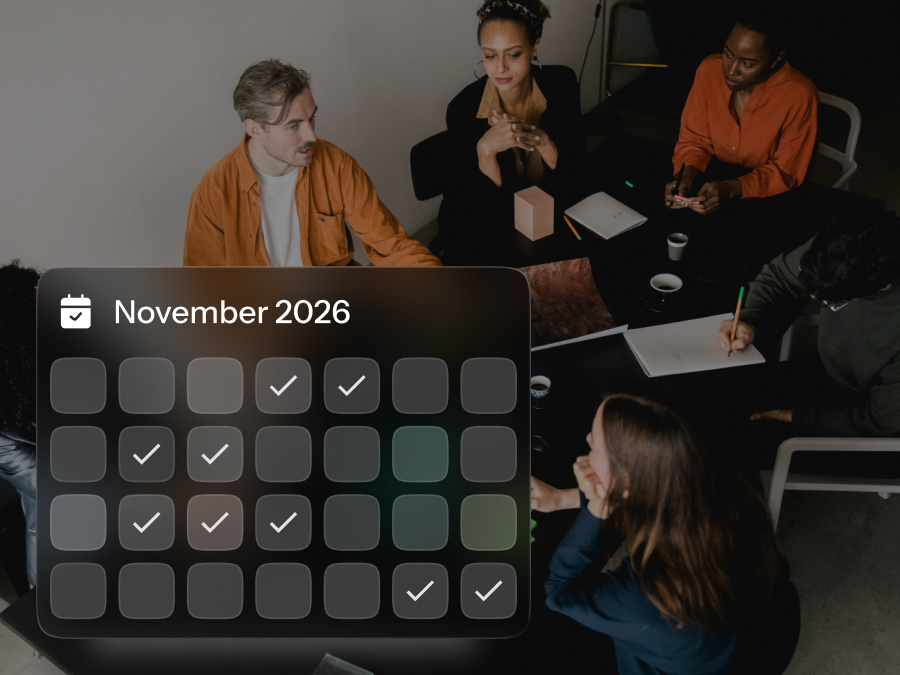
A shared calendar gives central teams visibility into what is happening across the organization without requiring check-in meetings or status update emails. Teams add their events with key details (date, location, headcount, budget, event owner), and operations or HR can see overlaps, flag conflicts, and track total event spend in one place.
The calendar also prevents duplicate vendor negotiations. When one team books a venue in Austin and rates it highly, other teams planning Austin events can see that relationship and reuse the contact instead of starting vendor outreach from scratch.
Create a pre-approved vendor list
A pre-approved vendor list removes one of the biggest sources of inconsistency - Carlson Wagonlit Travel found that 30% to 40% of event cost variance comes from teams going rogue with vendors who have no track record with the company. Teams still get to choose; they just choose from a vetted pool with known pricing and reliability. Pre-approved means vendors who have already provided proof of insurance, signed a master service agreement, and delivered at least one successful event.
If five teams have requested exceptions to book the same non-approved caterer in Seattle, that caterer should probably be on the approved list. Tracking exceptions is how the list stays current.
How an approval workflow protects team autonomy
A well-designed approval workflow means teams can move fast because they know exactly what will get approved before they start planning. Without one, every event request becomes a negotiation, and Vertice's Q1 2026 benchmarks show internal approval cycle times cluster around eight days, with Marketing and HR averaging 11 days.
When approvals live in Slack or email, the organization cannot see what is pending, who is blocking, or what is already committed. Timelines slip, deposits get rushed, and surprise invoices become normal.
A good approval workflow answers three questions before planning starts:
- What kind of event is this? A team lunch under $1,000 and a three-day offsite with 50 attendees should not go through the same approval process
- Who needs to sign off? Route by event type, budget threshold, or headcount, not by whoever happens to respond first to a Slack message
- What information does the approver need? A short, standardized request form means approvers get consistent inputs and can make faster decisions without follow-up questions
Set a simple event request form
A well-designed request form includes event type (team offsite, client event, sales kickoff, training), estimated headcount, proposed dates with flexibility noted, preferred location or region, budget estimate broken into major categories, and event goal stated in one sentence. The form should also surface policy automatically. If a team requests a $15,000 event and company policy requires finance approval above $10,000, the form flags that requirement before submission rather than after the planner has already started vendor outreach.
Route approvals by event type and budget
Not every event needs the same approver. A team happy hour under $500 might auto-approve or need only a manager sign-off, while a company-wide sales kickoff with 300 attendees and a $150,000 budget routes to finance, HR, and executive leadership. Routing by event type and budget keeps the process proportionate: teams planning low-risk, low-cost events move quickly, and high-stakes events get the scrutiny they need.
Make policy exceptions visible
Exceptions are inevitable. A team will occasionally need to go outside the standard process, such as booking a vendor not on the approved list because they are the only option in a specific location. The key is making exceptions visible and documented rather than quietly handled via email, so patterns emerge and policy can be updated accordingly.
How a single source of truth keeps events aligned
Consistency breaks down when event information lives in scattered spreadsheets, email threads, and individual Slack channels - companies report spending 5 to 10 hours per event reconciling data from multiple sources. Generic workflow tools track tasks; event platforms manage the financial, vendor, attendee, and policy system that causes overruns when it is decentralized. The difference is a standardized event object with consistent fields (budget, headcount, goals, vendor contracts, attendee satisfaction) that roll up into organization-wide reporting.
Track past and upcoming events in one place
A central dashboard where any authorized person can see every event the company has run or has planned prevents the "wait, is marketing also doing an offsite that same week?" moments. HR can see that three departments are planning offsites in October and suggest staggering dates to avoid venue availability conflicts. Finance can see that Q3 event spend is tracking 30% over budget with two months remaining and flag the issue before it becomes a year-end surprise.
The dashboard should show, at minimum:
- Event status (planning, approved, in progress, completed)
- Owner, date, location, and headcount
- Budget and a link to full event details
Compare budgets and KPIs across teams
When every team reports the same metrics in the same format, central teams can spot outliers. A team that consistently overspends by 20% needs process support or a budget adjustment. A team running events with an NPS of 75 against a company average of 55 is doing something worth replicating.
Keep attendee communication consistent
Attendee communication is one of the most visible places where consistency breaks down. One team sends a polished pre-event email series with travel details, packing suggestions, and a mobile-friendly agenda. Another sends a calendar invite with no details and answers logistics questions individually via Slack DM.
Standardized templates should cover:
- Pre-event announcements (save the date, registration open, travel details)
- Week-of reminders (final agenda, what to bring, parking instructions)
- Post-event follow-up (thank you, survey link, photos or recordings)
When should the central team step in
Most events can be team-led with light oversight, though a small category warrants direct central involvement. The line is not arbitrary; it tracks risk (duty-of-care obligations), spend (typically above $25,000), and audience (executive or client-facing).
Consider keeping central team involvement for events that meet any of these criteria:
- High budget threshold: Any event above $25,000 total spend or $500 per head, where vendor contract terms require legal review
- Executive or client-facing events: Sales kickoffs, client events, and incentive trips where the audience includes C-suite leadership or external stakeholders
- Travel or vendor complexity: Multi-city events, international travel, or events requiring hotel room blocks over 20 rooms, where duty-of-care obligations matter
- First-time event types: When a team is planning a format they have never run before, such as a first offsite or first multi-day conference, a central team touchpoint prevents avoidable mistakes like underestimating AV needs or missing permit requirements
FAQs
How much freedom should individual teams have when planning events?
Teams should have full creative freedom within a defined structure. They choose the format, venue, and activities, while the company sets the budget range, approval path, and reporting requirements.
What should a company event policy include?
A company event policy should cover budget tiers by event type, which events require approval and from whom, approved vendor categories, required post-event data, and any brand or communication standards that apply to all events.
How do you keep event standards from making every event feel the same?
Standards should govern the invisible infrastructure - budget tiers like $150 to $300 per head for offsites, approval routing by spend threshold, and required post-event NPS reporting - not the creative choices like venue aesthetic or team activities.
How often should a company event policy be updated?
Review the policy after any event that required an exception or generated a complaint, and do a formal review annually. Policy should reflect what is actually happening in the event calendar, not what was true two years ago.
Start planning in 2 minutes or less

.avif)

.svg)