Why do so many company offsites end with people feeling like they just sat through a long meeting with worse Wi-Fi?
Usually it comes down to one mistake: connection gets scheduled as an agenda item instead of built into how the day is structured. One team bonding block surrounded by slide decks does not build trust. It just makes people perform engagement for an hour and then go back to their laptops.
The logistics do not help either. If you plan $20,000 in food and beverage at a hotel, the banquet administration fee and sales tax push your actual spend closer to $26,760 before a single upgrade. Budgets slip quietly before the first session even starts.
This guide covers how to design an offsite that builds real connection, from setting goals before you open a venue search tab to the follow-through that keeps the impact alive. Zapier, Buffer, and GitLab all run offsites differently. What they share is intentional structure.
Why Do Company Offsites Feel Awkward?
Most awkward offsites share the same design flaw: connection gets treated as an agenda item rather than a structural outcome. When trust-building gets scheduled as a single "team bonding" block surrounded by presentations, people perform engagement instead of experiencing it.
Three patterns produce this failure consistently:
- Over-engineered icebreakers: They ask for vulnerability before trust exists, which makes people shut down rather than open up.
- Back-to-back slide decks: They leave no room for the informal conversations where real relationships form.
- Bonding as an afterthought: Activities get bolted on at the end of the day rather than woven through it, signaling that connection is a checkbox, not a priority.
An offsite that informs people can be an email. One that connects them requires intentional design from the first planning decision.
What Makes Connection Feel Forced?
Connection feels forced when the format does not match how humans actually build trust. Extroverts dominate open discussions while introverts disengage, and no quiet processing time gets built in for people who think before they speak.
The environment plays a bigger role than most planners expect. A hotel conference room with the same laptop-open habits produces the same dynamic as a Tuesday standup, just with worse Wi-Fi and a higher invoice.
What Do Better Offsites Do Instead?
Better offsites build connection into the structure of the day, not just the agenda items labeled "team time." They create conditions for trust through shared novelty, low-stakes conversation, physical movement, and space to be a person rather than a job title.
Research on in-person gatherings shows the ROI is real: attendees who participate in offsites receive 25% more new collaboration requests in the weeks that follow. Connection is not a soft outcome. It is a measurable one.
What Is a Connection-First Company Offsite?
A connection-first offsite prioritizes psychological safety and genuine relationship-building as the primary design goal, not just strategic alignment or information transfer. Work and connection can coexist, but human moments get protected rather than sacrificed for agenda coverage.
This framing matters most for distributed and hybrid teams who rarely share physical space, newly formed teams, and any group where leadership has identified low trust or low morale as a real obstacle to performance. The tactics here apply whether you are running a two-day leadership retreat or a five-day company-wide gathering.
How Do You Design a Company Offsite That Builds Trust?
The most common offsite failure happens before the first session starts: someone picks activities before defining what success looks like. Every design decision that follows depends on answering the goal question first.
Set Clear Goals Before the Agenda
Write down answers to three questions before you open a venue search tab:
- What do we want people to feel when they leave?
- What should be different about how this team works together the week after?
- What is the one thing we cannot leave without resolving?
Distinguish between business goals (strategy alignment, goal-setting, decision-making) and connection goals (trust, morale, psychological safety, working norms). A strong offsite addresses both, but knowing which is primary shapes every other design decision, including who should attend.
Include the Team Before Plans Feel Final
A short pre-offsite survey asking what people want more of, what has felt awkward before, and what they are hoping to get out of the time together dramatically increases buy-in. Even small acts of co-design, like letting team members own a session or choose an activity, signal that the event is designed for them, not at them.
Pre-work also serves a practical purpose. Sending a short reading or a question to bring to the offsite means the group arrives with shared context, and the first hour does not get eaten by orientation.
Pick a Location That Changes the Energy
A fluorescent-lit hotel conference room activates the same mental mode as the office, while a house with a big living room or access to outdoor space signals that this time is different. Environment is a design decision, not a logistics detail.
Look for:
- Open seating layout: Circular or flexible arrangements, not theater rows that reinforce hierarchy.
- Wall space: For sticky notes, flip charts, and visual outputs that make thinking visible.
- Outdoor access: Trails, courtyards, or walkable surroundings for movement breaks that reset energy.
- Shared living space: A common area where people naturally gather in the evening rather than disappearing to separate hotel rooms.
- Reliable logistics: Confirmed room rates, F&B minimums disclosed upfront, AV included or clearly scoped.
For distributed teams especially, the location choice sends a message about how seriously leadership takes the gathering. A memorable venue becomes part of the shared story the team carries back.
Balance Business Work With Human Time
Business time covers products, financials, goals, and strategy. Connection time covers how the team works together, what is getting in the way, and what people need from each other. For a two-day offsite, a rough split might be day one focused on business priorities and day two focused on team dynamics and working norms.
Real companies land on very different ratios depending on their goals:
- Zapier runs biannual retreats with four full work days plus one optional fun day, an 80/20 structured-to-unstructured split.
- Buffer runs nine-day retreats with a core Monday-to-Friday work schedule and weekends for fun, roughly 56% structured and 44% unstructured.
- GitLab schedules 6-7 hours of meetings on days two and three of executive offsites, with day four entirely unscheduled for ad hoc conversations.
Protect unstructured time explicitly on the agenda. Shared meals, free afternoons, and informal evening time are where the most durable connections form, and if unstructured time is not on the schedule, it gets cut when a session runs long.
Mix Sessions, Movement, and Quiet Reflection
Format variety is a connection tool, not just an energy management trick. Different people process and connect differently, and a single format excludes someone.
Alternate between:
- Large group discussion: Good for shared context and decisions, though it drains quieter voices if overused.
- Small group huddles (3-5 people): Lower stakes, higher participation. Pair people who do not normally work together.
- Guided journaling: Gives everyone equal time to form their thoughts before sharing, particularly useful for introverts and neurodiverse team members.
- Partner walks: One person speaks, one listens, then swap. Simple, effective, and gets people moving.
- Affinity diagramming: Sticky-note brainstorming that surfaces ideas from everyone simultaneously, not just the loudest voices.
Change locations between sessions where possible. Even moving from indoors to outdoors resets the room's energy and signals a shift in mode.
Plan for Introverts, Accessibility, and Real Life
Even five minutes of quiet writing before a group share changes who participates. Give people permission to opt out of specific activities without opting out of the event. Mandatory fun is not fun, and forcing participation in high-energy activities alienates the people who need connection most.
A short pre-event survey that asks about dietary needs, physical limitations, caregiving responsibilities, and time zones removes guesswork and signals care. Dietary and accessibility needs confirmed with the venue well in advance prevent the kind of operational miss that sets a negative tone before the first session starts.
Use a Facilitator When Leaders Need to Participate
A leader who is running the session cannot fully participate in it, and a leader who is participating cannot hold space for the group at the same time. Research on facilitation dynamics shows that power distance reduces voice: studies find employees are 40% less likely to voice dissent when the person who rates them is also running the room.
External facilitators help flatten power hierarchies and encourage candor by creating neutral space where status differences do not inhibit speaking up. For smaller teams or tighter budgets, an experienced founder peer, an internal L&D lead, or a structured agenda with clear time-boxing can serve the same function.
Which Offsite Activities Create Natural Connection?
The best connection activities share one trait: they give people something to do together that is not about performing competence. Activities that require collaboration, shared novelty, or low-stakes vulnerability consistently outperform generic icebreakers and forced team-building exercises.
Partner Walks
Pairs walk for a set time (20 minutes works well), one person speaks for half, the other listens, then they swap at the halfway point. Movement lowers social anxiety, and the one-speaks-one-listens structure equalizes participation regardless of seniority or personality type.
Pair people who do not normally work together. As a debrief, invite a few pairs to share one thing they heard from their partner, which brings insights back to the group without requiring everyone to perform vulnerability publicly.
Small Group Workshops
Small groups of three to six people lower the social stakes and surface more voices than large group discussion. Rotate group composition across the day so people interact with colleagues they do not normally work with, which is especially valuable for distributed teams who only know their immediate function.
Assign a simple output (a top three, a one-sentence summary, a photo of the sticky notes) so groups have something to share back without pressure.
Storytelling Circles
Give a prompt and invite people to share a short story (two to three minutes) that answers it. Good prompts:
- "A moment that shaped how you work"
- "Something that surprised you about this team"
- "A failure you learned the most from"
The leader or most senior person should go first. It sets the tone and signals that vulnerability is safe here. This works best in groups of six to ten; larger groups should break into smaller circles first, then share highlights with the full room.
Hands-On Creative Activities
Activities like a cook-off, pottery class, improv workshop, or collaborative art session shift people out of their professional identity and into a shared beginner experience. Improv workshops in particular are useful for teams that need to improve communication or get more comfortable with ambiguity, and the format makes everyone look equally silly regardless of title.
Choose activities with a low skill ceiling so no one is excluded by prior experience.
Shared Meals and Unstructured Time
Shared meals, evening free time, and informal hallway conversations are where people reveal themselves as humans rather than job titles. Over-programming evenings kills the organic connection that makes offsites worth the cost.
Staying in a shared house or the same hotel, rather than letting people scatter, dramatically increases the informal contact time that drives real relationship-building.
How Do You Avoid Common Offsite Mistakes?
Most offsite failures follow predictable patterns. Recognizing them early lets you design around them before they erode the event's impact.
Too Many Presentations
When the agenda is dominated by slide decks and status updates, the offsite becomes a long meeting with a nicer venue. Information that can be shared asynchronously should be. Reserve in-person time for discussion, decisions, and the conversations that only happen when everyone is in the same room.
A useful rule: if a session could be a pre-read, make it a pre-read. Send the deck in advance and use the live time for Q&A and dialogue.
Awkward Icebreakers
The problem with most icebreakers is not that they ask people to share. It is that they ask for vulnerability before trust exists, or they are so low-stakes they feel pointless. Questions that let people share something real without requiring emotional exposure work better:
- "What past experience are you most proud of?"
- "What's something we wouldn't know about you from your LinkedIn?"
Pair-and-share formats (two people discuss, then one shares back to the group) consistently outperform going around the room. They fill the space with energy and give quieter people a lower-stakes entry point.
No Clear Follow-Up
Everyone leaves with good intentions and no shared record of what was decided, committed to, or agreed upon. Assign a note-taker for each session and consolidate outputs into a single document shared within 48 hours. Schedule a follow-up touchpoint two to four weeks after the offsite to review commitments and keep momentum alive.
Leaders Who Facilitate and Participate
When a senior leader runs the agenda, the group self-censors. People do not challenge the CEO's framing when the CEO is also the facilitator. Even a lightly structured agenda held by a neutral party changes what the room is willing to say.
How Do You Make the Offsite Impact Last?
The offsite is not the end. It is the beginning of a new working dynamic, and without intentional follow-through, the impact evaporates within two weeks.
Capture Decisions and Takeaways
At the end of each session, take two minutes to capture what was decided, what was left open, and who owns what next. Photograph sticky note outputs and flip charts before the room is cleared. Consolidate everything into a single shared document and distribute it within 48 hours while the memory is fresh.
Assign Owners and Follow-Up Rituals
Before the final session ends, go around the room and ask each person to name one thing they will do differently or one action they are committing to. Write it down publicly. Teams who build small recurring rituals after an offsite, like monthly coffee chats, random pair check-ins, or shared Slack socials, sustain connection 2-3x longer than those who treat the offsite as a one-time event.
Measure Feedback, Connection, and ROI
Send a short post-event survey within 24 hours asking how connected team members feel now versus before the offsite, what worked, and what felt forced. Track attendee NPS across multiple offsites to show trend improvement over time.
For the finance conversation, frame the value in terms of hours saved on logistics, savings from negotiated vendor rates, and the productivity cost of low team trust. Gartner reports that when employees feel more connected to their organization's culture, performance increases by up to 37% and retention increases by up to 36%. A team that does not know or trust each other makes slower decisions and escalates more conflicts.
BoomPop's platform captures attendee feedback via post-event surveys and tracks KPIs across events in the Company Event Hub, which makes the ROI conversation easier without requiring the planner to build their own measurement system.
How Do You Plan the Logistics Without Losing Your Week?
Venue sourcing alone consumes five to ten hours per event even with technology, according to Cvent's 2026 Global Planner Sourcing research. DIY workflows expand those hours into extra back-and-forth: email threads, unstandardized proposals, manual comparison spreadsheets, and re-keying numbers. Audits find errors in roughly 88% of spreadsheets, and DIY offsites rely on them for rooming lists, dietary needs, invoices, and agendas.
Match Budget and Venue to the Team Goal
A leadership alignment offsite needs different space than a full-company connection retreat. The former benefits from a private house or small lodge where conversation flows freely; the latter needs enough breakout space for parallel sessions.
Key venue criteria to evaluate:
- Open seating layout: Circular or flexible arrangements, not theater rows.
- Wall space: For sticky notes, flip charts, and visual outputs.
- Outdoor access: Trails, courtyards, or walkable surroundings for movement breaks.
- Shared living space: A common area where people naturally gather in the evening.
- Reliable logistics: Confirmed room rates, F&B minimums disclosed upfront, AV included or clearly scoped.
Contract traps commonly surprise DIY teams. Attrition clauses can hold you liable for up to 80% of your room block. Cancellation damage schedules escalate to 80% of guest room revenue within 30 days of the event. F&B minimums that go unmet get converted into room rental charges. A real hotel banquet menu example shows a 20% banquet administration fee plus 11.5% sales tax applied to food, beverage, and event fees. If you plan for $20,000 in F&B, your outlay becomes about $26,760 before any overages or upgrades.
BoomPop offers a free budget estimator and hotel sourcing with discounts up to 40%, which helps planners model costs before pitching the event to finance.
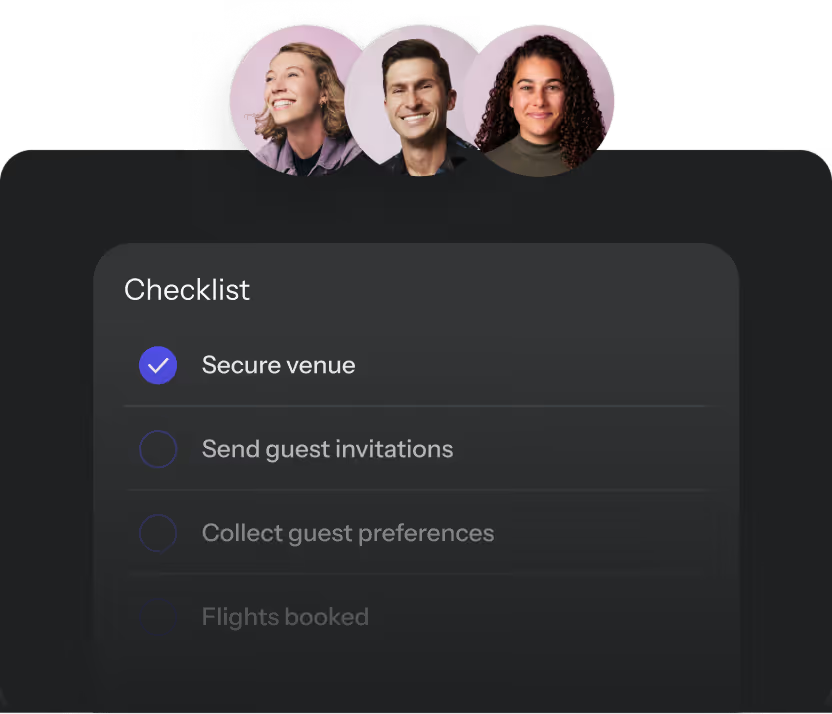
Give Attendees One Clear Source of Truth
Attendees who do not know what to expect, whether that is dress code, schedule, or what meals are covered, arrive anxious rather than open. Confusion before the event erodes the psychological safety the planner is trying to build. Centralize all event information in one place: itinerary, travel details, dietary confirmation, session descriptions, and any pre-work, updated in real time rather than sent as a new email every time something changes.
BoomPop's Guest Website centralizes RSVPs, itineraries, dietary needs, and real-time updates in one place, and BoomPop AI automatically answers attendee questions so the planner is not fielding the same logistics questions 40 times.
Know When to Bring in Planning Support
Sourcing venues, negotiating contracts, managing RSVPs, coordinating travel, and chasing dietary restrictions does not show up on a budget line. It comes out of someone's time and sanity, usually the person who already has a full-time job.
Signs it is time to bring in support:
- The event has more than 30 attendees
- It involves travel coordination across multiple cities or time zones
- It requires multiple vendors (catering, AV, activities, transportation)
- Leadership expects it to be "really special this year" without a clear brief
BoomPop's Offsites and Retreats offering combines expert planners with the platform, so internal teams can focus on content and relationships rather than logistics. BoomPop has helped Google, Salesforce, Shopify, and Amazon run offsites.
FAQ
How Long Should a Company Offsite Be?
Most connection-focused offsites run two to three days, long enough for people to move past surface-level small talk, short enough to stay within budget and not exhaust the team. A single day can work for smaller teams with a tight focus, though it leaves little room for the unstructured time where real relationships form.
How Often Should Companies Hold Team Offsites?
Most organizations find that quarterly team offsites and one annual company-wide gathering strike the right balance between connection and cost. Distributed and hybrid teams with no shared office often benefit from more frequent, smaller gatherings to supplement the larger annual event.
What Is a Realistic Per-Person Budget for a Company Offsite?
Per-person costs typically range from $200-$500 for a one-day local offsite to $1,500-$3,000+ for a multi-day out-of-state retreat, depending on destination, duration, and team size. Use a budget estimator to model scenarios before committing to a venue, and account for travel, meals, activities, and facilitation in addition to venue costs.
How Do You Run Icebreakers That Do Not Feel Awkward?
Replace generic icebreakers with questions that let people share something real without requiring emotional exposure. Pair-and-share formats, where two people discuss before one shares back to the group, consistently outperform going around the room.
Should Company Offsites Be Mandatory for All Employees?
Making attendance mandatory while making participation feel optional is the better design principle. Building in genuine choices (opt-out options, alternative activities, flexible evening time) signals that the event is designed for people, not just headcount.
What Should You Send Attendees Before a Company Offsite?
Send travel and logistics details as early as possible, followed by a brief pre-work prompt, a question to reflect on or a short read, that gives people shared context before they arrive. Confirm dietary needs, accessibility requirements, and dress code at least two weeks out so the venue can prepare and attendees can pack accordingly.
How Do You Measure Whether a Company Offsite Improved Team Connection?
Send a short post-event survey within 24 hours asking how connected team members feel now versus before the offsite, what worked, and what felt forced. Track attendee NPS across multiple offsites to show trend improvement over time, which is the most accessible metric for making the business case to leadership and finance.
Start planning in 2 minutes or less
.avif)

.svg)