When's the last time you left a team-building event thinking "that actually worked"?
Most teams cycle through the same escape rooms and trivia nights not because they're effective, but because they're easy to justify.
A Leadership IQ study of 6,821 employees found that 48% felt traditional forced-fun activities made them uncomfortable or inauthentic.
The activity has to overcome skepticism before it can do anything useful.
Research from the Journal of Organization Design shows connection forms more naturally when attention is on a mutual problem or task, not on performing closeness for each other.
This guide covers what actually separates a forgettable afternoon from a memorable event—based on research and specific activity formats—and how BoomPop's Offsites and Retreats service can handle the logistics so you're not managing five tools while also trying to pick the right activity.
Why Do Team-Building Activities Feel Generic?
Most teams default to the same rotation of escape rooms, trivia nights, and trust falls because they're easy to find and easy to justify on a budget request form. The activities weren't chosen because they work. They were chosen because they're familiar.
A University of Sydney study published in Social Networks found that team-building interventions perceived as heavy-handed or intrusive often backfire, especially when participation feels implicitly compulsory. A Leadership IQ study of 6,821 employees found that 48.5% agreed that traditional "forced-fun" activities make them feel uncomfortable or inauthentic. The activity has to overcome skepticism before it can create any connection at all.
What Makes a Team-Building Activity Actually Build Connection?
According to a field experiment in the Journal of Organization Design, connection happens when people learn something real about each other, collaborate on something that matters, or experience something together they couldn't have done alone. A field experiment published in the Journal of Organization Design randomized participants into joint tasks ranging from 20-minute conversations to week-long teams, finding that designed interactions systematically created new friendship and advice ties, accounting for about one-third of participants' friendships and advice relationships.
The same Journal of Organization Design study found that relationships form more naturally when attention is on a mutual problem or task, not on performing closeness. Key conditions that separate generic from genuinely connective activities include:
- Shared focus over forced interaction: Activities that give people something to do together let relationships form naturally without putting anyone on the spot.
- Optional depth: The best activities let introverts contribute without being forced to share, while extroverts can take a more active role if they choose.
- Novelty with low stakes: New experiences create memorable moments, and low stakes keep the atmosphere relaxed enough for real conversation to happen.
What Are Creative Team-Building Ideas That Foster Real Connection?
The activities below are organized by format rather than industry or team size, because the same team might need different formats depending on what connection problem they're trying to solve. Each category includes specific activities with a note on why each one works.
Story and Values Activities
Your new hires have been on three video calls and still don't know anyone's last name. Story and values activities work especially well for new or distributed teams because they give people a clear prompt and a time boundary, removing the pressure of unstructured vulnerability.
A NeuroImage study comparing natural discussion versus turn-taking versus electronic brainstorming found that turn-taking stimulates creative performance and interpersonal interaction, with higher idea uniqueness under turn-taking versus electronic modes. Structured formats give quieter team members built-in airtime.
Activities that work across team sizes:
- Life map: Each person draws or maps a key moment from their life, then the group shares and finds unexpected common ground without forcing anyone to go deeper than they're comfortable.
- Personal presentation: Team members prepare a short visual on three things that shaped who they are, structured enough for introverts to prepare in advance.
- Two truths and a lie (with prep time): Give people 15 minutes to prepare so answers go deeper than surface-level facts.
- Passions tic-tac-toe: A mingle-style game where people find colleagues who share a passion or value, structured enough to remove the awkwardness of open networking.
Hands-On Creative Challenges
When everyone's focused on making something together, small talk stops being a requirement. Hands-on creative challenges work across skill levels and comfort zones because the activity itself provides the structure.
A study on team-based games using the "Marshmallow challenge" with 100 employees found psychological safety increased significantly after the game (p < 0.001). Low-stakes, playful problem-solving builds the "safe to speak up" muscle without putting anyone on the spot.
Activities that create tangible outcomes:
- Collaborative mural or art project: Teams contribute to a single large canvas around a company theme, and the finished piece can be displayed in the office as a reminder of the day.
- Cooking class: Teams learn a recipe or technique together, and the shared meal at the end anchors the memory in a way a debrief never could.
- Company logo or mascot build: Small teams recreate or reimagine the company logo using physical materials, with friendly competition built in.
- Silent building challenge: Pairs build a structure without speaking, surfacing nonverbal communication styles quickly.
Shared Service Activities
Volunteering builds a sense of shared purpose—for example, 78% of employees in a Deloitte survey said volunteering together improved morale—though it works best when the cause connects to something the company already cares about rather than a random charity chosen by the event planner.
Activities that create visible impact:
- Community clean-up or garden project: Low barrier to entry, works for all fitness levels, and creates visible impact the team can see immediately.
- Gift packing for a local cause: Tactile, collaborative, and easy to scale for large groups without requiring specialized skills.
- Skill-sharing with a nonprofit: Teams contribute their actual professional skills like design, finance, or marketing to a local organization, which feels more meaningful than generic volunteering.
Offsite and Outdoor Team Activities
Research on environmental psychology shows that changing the physical environment is one of the most reliable ways to reset team dynamics, with novel settings reducing habitual interaction patterns. These activities work best when they're built into a broader offsite or retreat, not dropped into a regular workday where people are still checking messages between sessions.
Activities that leverage location:
- Camping trip or outdoor retreat: Shared logistics like cooking, navigating, and setting up create natural collaboration moments that don't feel forced.
- Ropes course or adventure challenge: Physical challenges that require trust and communication, though activities should be accessible for different fitness levels to avoid excluding anyone.
- Scavenger hunt (location-based): Customize clues around the city or venue to add novelty, and split large groups into competing teams to keep energy high.
- Axe throwing or similar skill-based activities: Low-stakes, high-energy, and naturally social, with a learning curve that levels the playing field between senior and junior team members.
Offsite activities tend to create stronger connections when they're part of a structured retreat with a curated itinerary—such as a 2-3 day program with mixed activity formats—rather than a one-off afternoon bolted onto a work trip.
Low-Stakes Competition and Games
Friendly competition—like the low-stakes games in the Marshmallow challenge study—creates energy and gives people something to rally around without the pressure of performance reviews. These work well as openers or closers for a larger event because they shift the energy quickly.
Activities that create momentum:
- Office olympics: Paper airplane contests, speed-walking challenges, penny-stacking, all silly by design, which is the point.
- Trivia with company culture questions: Mix general knowledge with inside-joke questions about the team, and it works equally well in person or virtually.
- Moonshot brainstorm: Teams pitch an impossible solution to a real company problem with no constraints and no judgment.
- Mini hackathon: Small teams solve a real but low-stakes internal challenge in a fixed time window, then debrief together on what surfaced.
Quiet Reflection and Appreciation Activities
Not every team needs high energy—teams going through organizational change, layoffs, or extended crunch periods often benefit more from reflective formats. These activities build connection through recognition and honest conversation, and they're particularly effective for teams going through change or stress.
Activities that create space for reflection:
- Strength envelopes: Each person writes strength statements for a colleague, and everyone leaves with a set of handwritten notes they can keep.
- Achievement sharing: Small groups share a personal or professional accomplishment, and the rest of the group names the strengths they observed in the story.
- Trust battery check-in: Team members privately reflect on their trust levels with each colleague, then identify one action to rebuild or reinforce.
- Heard, seen, respected: A structured listening exercise where participants practice empathy by translating what a colleague shares into what they actually care about.
How Do You Choose Team-Building Activities People Actually Enjoy?
The right activity depends on your team's size, format, and what connection problem you're actually trying to solve. A new team that doesn't know each other's names needs different activities than an established team with low energy or a team with trust issues that need repair.
Match Each Activity to a Team Goal
Not all connection problems are the same. The activity format should match the specific outcome you need:
- New team or onboarding: Prioritize icebreakers and story-sharing activities that help people learn each other's names, backgrounds, and working styles.
- Established team with low energy: Prioritize novelty like offsite activities, creative challenges, or anything that breaks the routine and resets the dynamic.
- Team with friction or trust issues: Prioritize reflection and appreciation activities, and avoid high-stakes competition that could deepen divides.
- Distributed or hybrid team: Prioritize activities that work asynchronously or require only a video call, like virtual trivia, skill-swap sessions, or online scavenger hunts.
Design for Different Comfort Levels
As the Leadership IQ study showed with 48.5% of employees feeling uncomfortable in forced-fun activities, generic activities often backfire because they're built for one personality type. The best activities accommodate both introverts and extroverts by building in structure that removes awkwardness for quieter team members while giving extroverts optional leadership roles.
Key design principles:
- Structure removes awkwardness for introverts, like giving people prep time before sharing in a group setting.
- Optional leadership roles let extroverts contribute without dominating the conversation or activity.
- Physical activities should have accessible alternatives so no one feels excluded based on fitness level or mobility.
Mix Creative, Social, Physical, and Reflective Formats
Variety across a multi-day event or recurring program—such as mixing 2-3 different format types per day—keeps engagement high. A simple format mix for a full-day or offsite event:
How Do You Plan a Team-Building Event Without Extra Stress?
Great activity ideas don't help if the logistics fall apart—missed vendor confirmations, double-booked venues, or unclear itineraries can undermine even well-designed activities. Microsoft's Work Trend Index reports that employees are interrupted every two minutes by meetings, emails, and notifications, and 48% say work already feels chaotic and fragmented. Multi-tool planning adds to that load, not away from it.
Set Clear Goals and Participation Rules
Before choosing activities, define what success looks like for this specific event. "Help the new hires feel integrated" and "re-energize a team that's been heads-down for six months" require completely different activity choices.
Key planning principles:
- Set a clear goal that shapes every activity choice, not just a vague mandate to "make it memorable."
- Communicate participation expectations in advance so no one feels ambushed by a vulnerability exercise or physical challenge.
- Make participation genuinely optional for the highest-stakes activities, because forced participation kills the atmosphere and creates resentment.
Add Rotations, Breaks, and Flexible Participation
Rotate team compositions across activities so people interact with colleagues outside their immediate pod. Build short breaks between activities because informal conversation during downtime is often where the real connection happens. For large groups, use rotation stations so no one is waiting around while others finish.
Use Feedback to Improve the Next Event
A short post-event survey with three to five questions captures what landed and what didn't. Track which activities generated the most conversation or energy, because those are the ones to repeat or build on. Share results with leadership in the language they understand: attendee satisfaction, engagement observations, and whether the team left energized.
How Can a Planning Partner Make Real Team Connection Easier?
Sourcing activities, managing hotel room blocks, and building an itinerary at the same time—often across 5+ different tools and vendors—is how good events turn into stressful ones. BoomPop's Offsites and Retreats service pairs expert human planners with curated destination guides and 1M+ vendor partners, so activity selection is a recommendation from someone who has seen what works for similar teams, not a Google search followed by a gamble on whether the vendor will respond.
Map Team Activities to the Full Offsite Agenda
BoomPop handles end-to-end logistics including venue, vendors, itinerary, and travel, so the planner can focus on content and relationship-building rather than operations. Activity options are pre-vetted across 1M+ vendor partners—including reviews, pricing, and availability checks—which removes the sourcing risk that comes with DIY planning.
Use Guest Tools, Itineraries, and Surveys to Protect the Experience
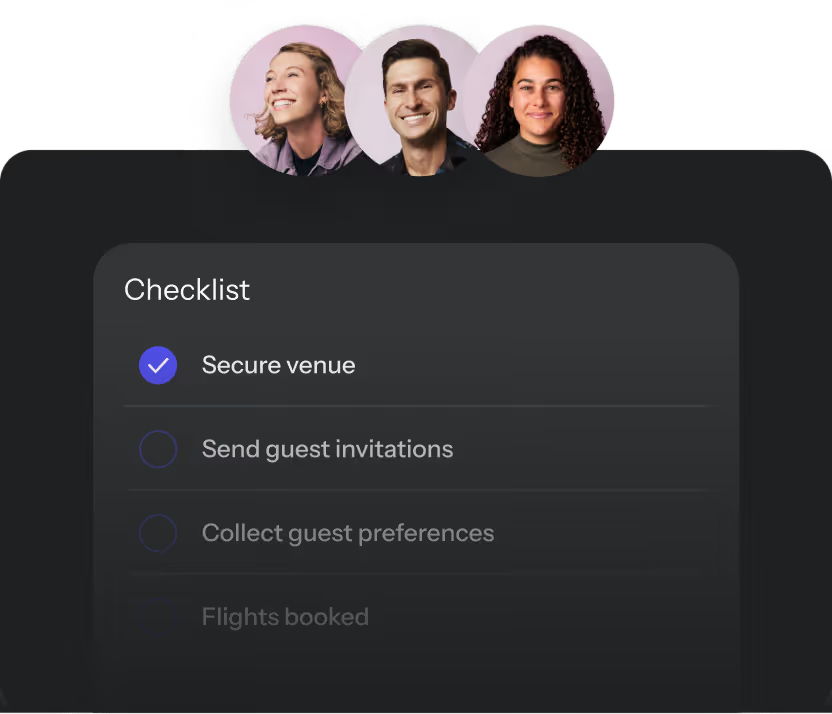
The BoomPop platform manages guests, tracks budgets, builds an event website, creates and shares itineraries, and collects attendee feedback via surveys, all in one place. AI-powered guest messaging automatically answers attendee questions, so the planner isn't fielding "what time does it start?" texts the morning of the event. For planners who have previously managed retreats across five different tools, consolidating to one platform can reduce coordination time by hours per event.
FAQs About Creative Team-Building Ideas
What Are Creative Team-Building Activities?
Creative team-building activities are structured group experiences—such as collaborative art projects, cooking classes, or story-sharing exercises—designed to build genuine connection, trust, and collaboration by giving people something meaningful to do, make, or share together rather than forcing vulnerability through generic icebreakers.
What Are the 5 C's of Team Building?
The 5 C's of team building are Communication, Collaboration, Commitment, Confidence, and Creativity, a framework that describes the core skills and behaviors that effective team-building activities are designed to strengthen.
What Are the 7 C's of Collaboration?
The 7 C's of collaboration typically include Communication, Coordination, Cooperation, Cognition, Coaching, Conflict resolution, and Conditions, a model used to evaluate how well a team is set up to work together across different functions and situations.
What Are the 5 P's of Team Building?
The 5 P's of team building are Purpose, People, Process, Place, and Plan, a planning framework that helps organizers align every element of a team event to a clear goal rather than defaulting to generic activity formats.
What Team-Building Activities Work Best for Hybrid or Remote Teams?
Virtual trivia, online scavenger hunts, skill-swap workshops, and structured storytelling exercises work well for hybrid or remote teams—requiring only a 30-60 minute video call—and can be adapted for asynchronous participation across time zones.
How Do Team-Building Activities Help Introverts Participate Comfortably?
Activities that give participants 10-15 minutes of prep time, offer structured roles, or focus on a shared task rather than open-ended sharing tend to work better for introverts—as supported by the NeuroImage study on turn-taking—because the goal is to create conditions where everyone can contribute at a level that feels natural to them.
How Often Should Companies Plan Team-Building Activities?
A light activity monthly (15-30 minutes), such as a quick icebreaker or group share, combined with a more structured event quarterly (half-day to full-day) tends to keep team connection consistent without overwhelming busy schedules, though the right cadence depends on team size, workload, and how distributed the team is.
Start planning in 2 minutes or less
.avif)

.svg)