
This is Our Events Industry Manifesto.
Gatherings are infrastructure.
For most of modern work, culture was accidental. You sat near people, you ran into them in hallways, ideas happened in the margins between meetings. Teams aligned simply because they existed in the same physical space.
Then work changed. Teams spread out across cities, countries, time zones. The office dissolved. And collaboration moved into software. But something strange happened along the way: work scaled beautifully—culture didn’t.
Relationships grew thinner, alignment slowed down, decisions stretched longer than they should have. Entire teams began operating with slightly different understandings of what mattered. The modern company is incredibly productive, sure. But it’s often slightly out of sync.
And there is still only one reliable way to fix that: put people in the same room.
The Gathering Gap
The importance of gatherings has quietly exploded.
Offsites, leadership summits, kickoffs, team retreats, customer events: these are the moments when strategy resets, trust builds, and teams leave moving faster than before. But the infrastructure behind those gatherings hasn’t kept up.
Planning an offsite today still looks strangely similar to how it did twenty years ago: spreadsheets, scattered vendor searches, email threads negotiating room blocks, a dozen tools stitched together by one very organized (albeit exhausted) human.
It works okay, but it’s very fragile. Every gathering becomes a small logistical miracle, held together by manual coordination and a lot of patience. The bigger the company grows, the more unsustainable that becomes.
The pattern every industry follows
At first, a process is manual—until someone builds a service around it. And eventually, it becomes a platform.
Recruiting followed that arc, so did Sales, and Finance transformed the same way. Now Events are hitting that turning point. Because when something becomes operationally important enough, companies stop improvising and start building systems.
(we already built that system.)
Gatherings as a company capability
The next generation of companies will treat gatherings differently. Not as occasional projects, not as fun perks, but as an operating capability—something designed intentionally, run consistently, and improved over time.
A leadership summit will feed directly into company priorities. A sales kickoff will accelerate the pipeline. A team offsite will unblock decisions that would take months over Slack. When gatherings work, the impact lasts long after the event itself. But to make that possible, companies need infrastructure and a creative approach. Not more spreadsheets, and definitely not more email threads—a solid system with intentional details.
Why we exist
BoomPop exists because bringing people together is now a core function of modern companies. And core functions deserve real software.
This is the platform where companies plan, source, book, and run all their events. Instead of stitching together vendors, travel sites, budgets, and logistics across multiple tools, everything lives in one system designed specifically for group gatherings and travel.
It’s a platform that connects planning, supply, execution, and spend into a single workflow. Not just for one event, but for every gathering a company runs. When that happens, something subtle shifts: gatherings stop feeling chaotic and they start feeling like a capability your company actually has. That’s when logistics fade into the background for the real reason to take center stage: the work moves forward.
Category definition
BoomPop is the platform for company events and group travel—replacing agencies, spreadsheets, and scattered tools with one system to plan, book, and run gatherings at scale.
Work changed
Teams are distributed, expectations are higher, and budgets are scrutinized. When companies bring people together, the time needs to count. Gatherings are no longer optional moments: they’re the points where alignment happens and momentum returns.
The old system
Most events are still planned through a patchwork. Spreadsheets for budgets, email threads for vendors, travel sites for booking, planning docs that live in someone’s drive. It only works if someone holds the whole process together manually. And that’s incredibly frustrating.
The new system
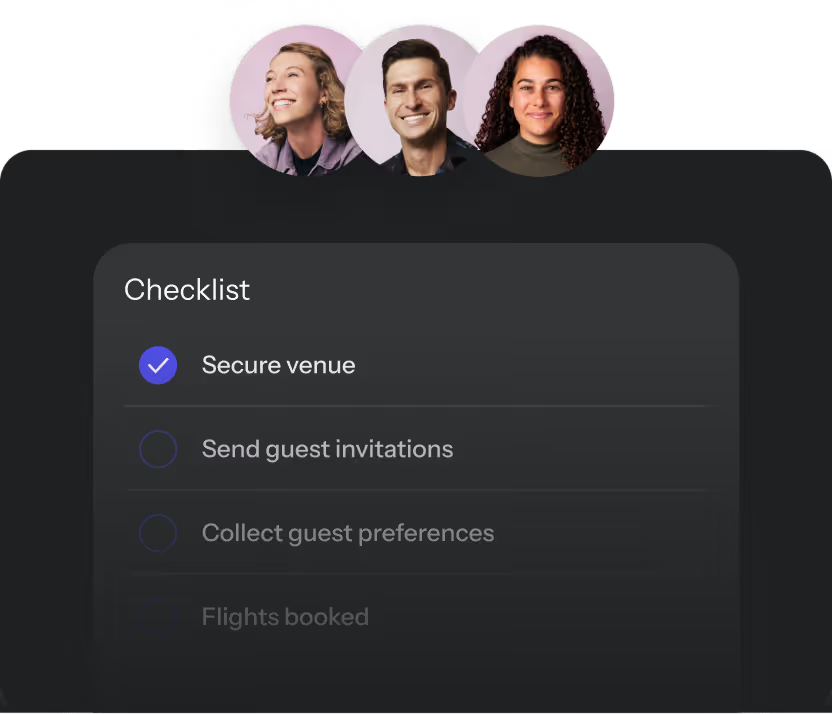
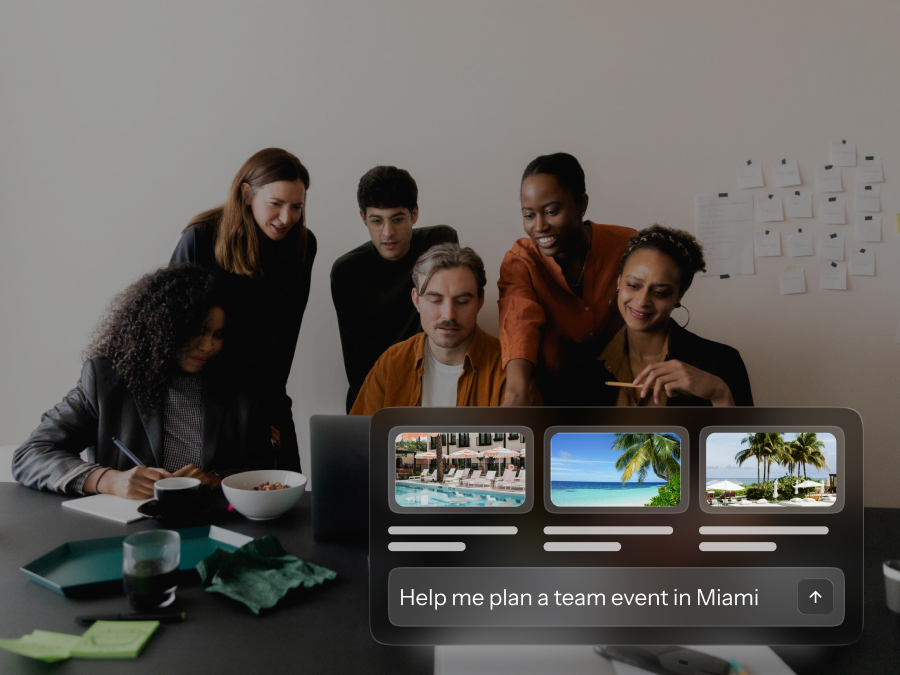
BoomPop trades that patchwork for a platform. One place to plan the gathering, source and book venues, manage vendors and travel, track budgets and approvals, and run the event itself. Instead of coordinating tools, teams coordinate the experience (which is the best part).
What BoomPop replaces
The old stack:
- Agencies
- Spreadsheets
- Vendor emails
- Multiple booking sites
- Manual invoicing and reimbursements
Basically, BoomPop consolidates the entire workflow: planning, sourcing, contracts, budgets, and attendee experience now happen inside the same system. The result is simpler and more reliable.
What this unlocks
When events run through a platform, companies start seeing patterns. Planning speeds up, budgets stay visible, experiences become consistent, and each gathering improves the next one. What used to feel chaotic begins to feel repeatable.
Why we lead
BoomPop was built as infrastructure. Software workflows, curated venues and experiences, operational support when needed, and financial visibility across the process. They don’t just meet clients where they are with custom plans—they craft intentional moments with creativity that fuels team ideation and strategic alignment.
BoomPop is an events platform that satisfies a demand for organizational clarity, supported by a Studio of event pros who deliver alchemy as a spark that unblocks the hive mind. Together, those pieces create something new: a system companies can use to run events the way modern work demands.
The takeaway
Work evolved while events didn’t. Until BoomPop made events catch up.
Start planning in 2 minutes or less
.avif)

.svg)