
When leadership asks what you spent on offsites last quarter, how long does it take you to find the answer?
For most People Ops teams, it is not a quick lookup. It is a trip through Slack threads, old spreadsheets, and email chains that may or may not be complete.
That is the problem platforms like BoomPop are built to solve. This guide compares BoomPop, Cvent, Whova, and Eventbrite so you can find the right fit for your team.
What is a platform for People Ops visibility into company events?
A platform for People Ops visibility into company events is centralized software that gives HR and People Ops teams a live view of all past, current, and upcoming company events, including who is attending, what was spent, and whether events are approved and on track. It is not an HRIS, which tracks headcount and payroll, and it is not a ticketing tool built for public registration. It is built specifically for internal corporate events: offsites, retreats, SKOs, client events, and incentive trips.
Why does People Ops need one source of truth for company events?
When leadership asks "how many events did we run last quarter?" or "what did we spend on offsites this year?", most People Ops teams cannot answer without digging through Slack threads, Google Sheets, and email chains. That visibility gap is not just inconvenient - it can mean hours of manual work each time leadership requests event data. It makes it nearly impossible to justify event budgets, enforce consistent policies, or show finance what the company is actually spending.
Three problems compound when there is no central system:
- No event history: Past events, venues, and vendor contacts live in someone's inbox or a spreadsheet only one person can find.
- No spend oversight: Budget gets tracked after the fact, if at all, making forecasting a guessing game.
- No approval structure: Event requests arrive through ad hoc channels with no consistent policy, leaving People Ops permanently reactive.
McKinsey research found that HR departments spend close to 60% of their time on transactional and operational work. Internal events run through spreadsheets and email fall squarely into that bucket, competing directly with the strategic work that actually moves the needle.
How do event requests and approvals stay on track?
Employees submit event requests through a standardized form, approvers are configured in advance, and the platform routes requests automatically based on event type, budget threshold, or team. BoomPop's Event Management Platform includes customizable policies, configurable approvers, and easy employee request submission. Without that structure, requests arrive via Slack, approvals are informal, and nothing is documented.
How do budgets, attendees, and KPIs stay visible?
A Company Event Hub surfaces metrics across all events in one dashboard: total attendees, number of events run, destinations visited, budgets, and KPIs. It is a live view, not a post-event report someone has to compile manually, which is what makes People Ops look proactive to finance and leadership rather than reactive.
How do guests get answers without more planner work?
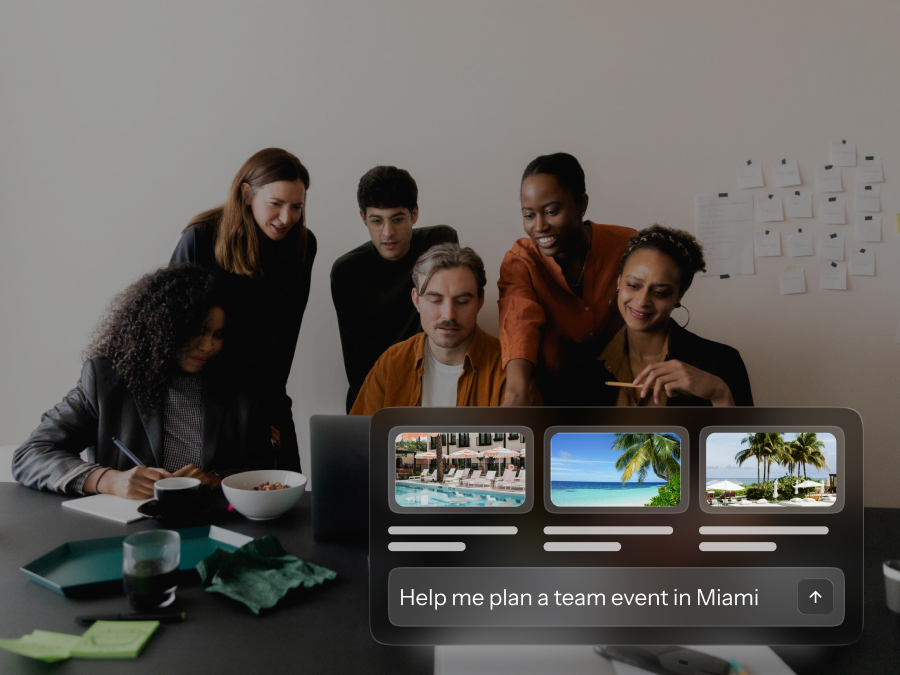
Instead of the planner fielding individual questions about hotel check-in times, dietary options, or event schedules, an AI assistant automatically answers guest questions via text or messaging. BoomPop AI handles hotel suggestions based on event parameters and enables natural-language updates to event details, cutting the back-and-forth that eats up planning hours.
What should a company event visibility platform include?
Not all event platforms are built for People Ops. A tool built for public conference ticketing or attendee networking will leave significant gaps when your job is managing internal events, enforcing budget policies, and reporting to leadership.
Look for these core capabilities:
- Company Event Hub: A single dashboard showing all past, live, and upcoming events with real metrics on attendance, spend, and status, not just a list of event names.
- Policy and approval workflows: Configurable rules that define who can request events, what budget thresholds require approval, and which stakeholders are notified at each stage.
- Hotel and vendor sourcing: Built-in access to a vetted vendor network with the ability to send RFPs, compare quotes, and book without leaving the platform.
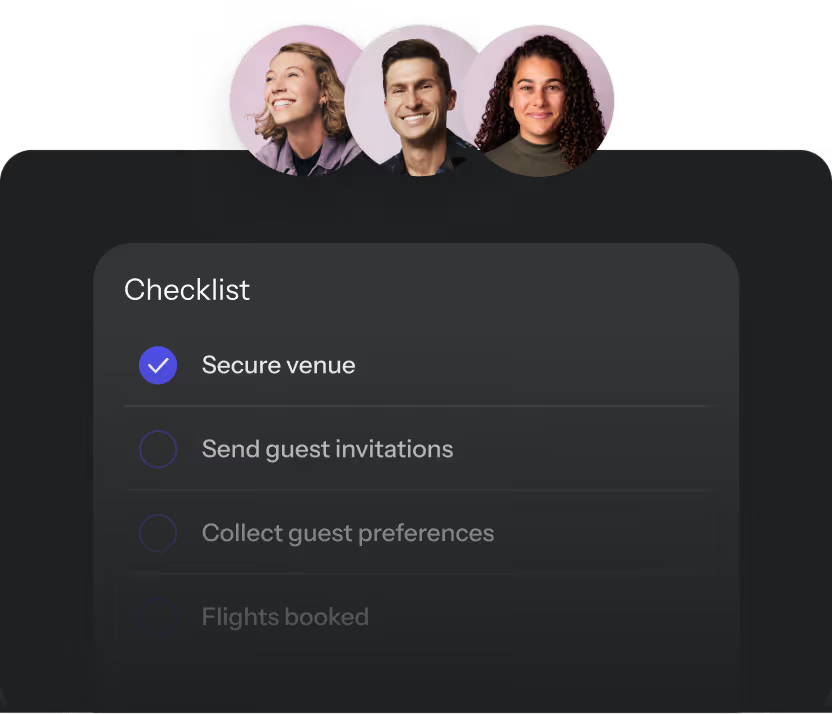
- Guest management and communication: Tools to collect RSVPs, dietary preferences, and travel details, plus automated messaging so guests get answers without the planner becoming a help desk.
- Reporting and analytics: Post-event data on spend per head, attendee counts, satisfaction scores, and budget vs. actuals in a format shareable with finance or leadership without manual compilation.
- AI assistance: Intelligent venue suggestions based on event parameters, natural-language event updates, and automated guest Q&A.
The venue sourcing piece alone can save 5 to 20 hours per event. A VenueNow survey found that 71% of corporate planners spend more than 5 hours finding a venue, with 19% investing 10 to 20 hours, and that is before negotiation or contract review.
What is the best platform for company events?
The right platform depends on what kind of events you run and who is doing the planning. A dedicated events team running 50 external conferences a year has different needs than a People Ops team managing quarterly offsites alongside everything else on their plate.
BoomPop for end-to-end company event visibility
BoomPop is purpose-built for corporate event management, combining a Company Event Hub, policy and approval workflows, AI-powered guest messaging, hotel and vendor sourcing with discounts up to 40%, and post-event analytics in one place. Organizations including Google, Salesforce, Shopify, and Amazon use it to manage their event programs. Both a self-serve platform and a full-service planning option are available for teams that want human support alongside the software.
Key capabilities include:
- Company Event Hub with live metrics across all events
- Customizable event request forms and configurable approvers
- AI guest messaging and hotel sourcing
- Budget tracking and post-event reporting
- Access to 1M+ vetted vendors and venues
Best for: mid-sized to large organizations with People Ops, HR, or Events teams running frequent internal and external events.
Cvent for enterprise conference management
Cvent is built for large-scale external conferences managed by dedicated event teams, with capabilities including registration, venue sourcing, onsite check-in, mobile apps, and enterprise reporting. G2 reviews note that "the interface can still feel complex and occasionally overwhelming for new users," and implementation timelines reflect that: Cvent's own case studies describe 10-week implementations, with community guidance recommending 8 to 10 weeks of lead time before an event.
- Choose Cvent when your organization runs dozens of external conferences annually and has a full-time events staff to manage the platform.
- Avoid Cvent when your People Ops team is managing internal events alongside other responsibilities and needs something they can get up and running quickly.
Whova for conference attendee engagement
Whova handles speaker management, session scheduling, live polling, and attendee networking well, making it a strong fit for multi-track conferences where the attendee-facing experience is the priority. It does not address venue sourcing, vendor management, or the internal approval and budget workflows People Ops teams need. A third-party integration page specifically pitches adding ApproveThis to create approval workflows "with Whova," which signals that approvals require an external tool rather than native functionality.
Eventbrite for public-facing event ticketing
Eventbrite is a ticketing and event discovery marketplace, not a corporate event management platform. It does not handle venue sourcing, vendor coordination, budget tracking, or employee event request workflows. If your goal is selling tickets to a public event, it works. For internal corporate events, it is the wrong category of tool.
How do you make the business case for an event visibility platform?
The argument is not abstract ROI theory - it is built on measurable costs and documented outcomes. It is specific costs and outcomes that finance and leadership can actually evaluate.
Show the hidden cost of DIY event management
A planner spending 10 to 15 hours on logistics for every event is time not spent on strategic People Ops work like retention programs, engagement initiatives, or workforce planning. The hidden cost categories include:
- Planner time on manual sourcing and vendor follow-up
- Budget overages from untracked vendor fees and scope changes
- Missed savings from lack of negotiated vendor rates
- Leadership visibility gaps that make events harder to justify at budget time
Even the "just get the request out" step is measurable: the Events Industry Council reports a median of 2 hours for corporate buyers to prepare an eRFP. Hotel RFP response times increased from 4.84 days in March 2025 to 5.08 days in March 2026, according to Cvent Planner Pulse data, and that delay creates downstream labor in follow-ups and re-planning.
Tie event data to employee engagement outcomes
A 2023 Harvard Business Review Analytic Services survey of 425 business decision makers found that 52% experienced decreased employee engagement due to fewer in-person internal meetings during the pandemic, and 88% said in-person interactions including meetings, offsites, and workshops are critical for positive long-term relationships between employees and coworkers. Achievers Workforce Institute's 2024 Engagement and Retention Report found that employees who feel a strong connection to their coworkers are 22% less likely to job hunt. Internal events - offsites, retreats, and team-building gatherings - are one of the most direct levers People Ops has to create that connection, and a platform that captures attendance, spend, and post-event feedback gives you the data to prove it.
Track savings before finance asks
BoomPop's vendor network and hotel sourcing discounts of up to 40% create savings that can offset the platform cost entirely. Having that data in a live budget dashboard means People Ops can show finance the savings proactively, before the question is asked, which flips the ROI conversation from defending spend to presenting savings.
Global DMC Partners' Q4 2024 Meetings and Events Pulse Survey found that 42% of planners saw 11 to 20% increases in hotels and venues, and 35% saw the same range of increases in food and beverage. Without tight controls and visibility, that kind of inflation turns into surprise overages of 10 to 20% or last-minute scope cuts to activities and catering.
FAQ
Is a company event platform the same as an HRIS?
No. An HRIS manages employee records, payroll, and HR compliance, while a company event platform manages the planning, approval, logistics, and reporting for corporate events. Most organizations use both.
What types of company events should People Ops track?
People Ops teams typically track offsites and retreats, sales kickoffs, client events, conferences, incentive trips, and team-building events: any gathering where the company is spending budget and coordinating logistics across multiple employees and vendors.
Who should approve employee event requests?
Most organizations configure approvals based on event budget, team size, or event type, with direct managers approving small team events and People Ops or finance approving larger gatherings that exceed a defined budget threshold.
How should People Ops measure event ROI?
The most practical metrics are cost per attendee, attendee satisfaction or NPS scores, and whether the event came in at or under budget, paired with qualitative signals like employee engagement survey scores in the weeks following a major offsite or retreat.
Start a company event in 2 minutes or less
BoomPop is the event management platform built for People Ops teams who need visibility, control, and less manual work. Get started for free or schedule a demo to see how the platform works.
Start planning in 2 minutes or less

.avif)

.svg)