

The hotel sales rep finally replies. Four days after your initial inquiry, two follow-ups deep, and now you have a quote that's missing the F&B minimum, doesn't mention AV costs, and uses a room block configuration that doesn't match what you asked for.
You go back and forth three more times. By the time you have an apples-to-apples comparison between this venue and the two others you're considering, a week has passed and the dates you wanted are now "tentatively held" by someone else.
This is the part of event planning that no one talks about when they say "we need better venue management software." Most people imagine the software solving the booking side - the calendar, the invoices, the floor plans. And for venue operators, that's exactly what it solves.
But for the planner who has to find and secure the venue in the first place? That's a different problem, and it requires a different kind of tool.
This article covers both. If you're a venue operator managing bookings, inquiries, and operations across your own space, platforms like Tripleseat, Perfect Venue, and Momentus are built for you. If you're a corporate planner or EA trying to source, negotiate, and book venues for your company's events, BoomPop and Cvent are the tools that actually address your problem.
We compare seven platforms: BoomPop, Cvent, Tripleseat, Perfect Venue, Momentus Technologies, Event Temple, and Planning Pod.
Two very different problems with the same name
"Venue management software" means something different depending on which side of the booking you're on.
If you operate a venue - a hotel, restaurant, event space, or conference center - venue management software is your business operating system. It tracks incoming leads, manages your booking calendar, generates proposals and BEOs, handles invoicing, and coordinates staff across simultaneous events. The software serves you. Your clients are the ones sending you RFPs.
If you plan corporate events - as an EA, a people ops manager, a dedicated event planner, or anyone who books venues on behalf of a company - venue management software should help you source venues: find the right options, submit RFPs without spending three hours per venue, compare quotes, negotiate terms, and manage the booking through to contract. The software serves you too, but in the opposite direction.
Most platforms serve one of these audiences well. Almost none serve both. Choosing the wrong category wastes months.
Who this article is for
If you run a restaurant, hotel, or event space and need to manage your own venue operations and revenue pipeline: skip to Tripleseat, Perfect Venue, Momentus, and Event Temple in the list below.
If you plan events on behalf of a company and need help finding, booking, and managing venues for your team's offsites, conferences, and corporate gatherings: start with BoomPop and Cvent.
The rest of this article covers both in honest detail.
How we evaluated these platforms
The criteria that predict whether venue management software actually gets used - and reduces the right kind of work - depend on which problem you're solving.
For venue operators, the relevant criteria are: lead capture and response speed, calendar and conflict management, proposal and BEO generation, client communication, and integration with payment and accounting tools.
For corporate event planners, the relevant criteria are: venue discovery and RFP automation, negotiation support, budget visibility, guest management, and integration with the rest of the event planning workflow.
We evaluated each platform against the criteria relevant to its actual use case, not a generic feature checklist.
The 7 best venue management software platforms
1. BoomPop - best for corporate planners who need to source, book, and manage venues without the back-and-forth
The venue sourcing problem is specific and brutal: you need to find a venue, send an RFP, wait for a response, chase down missing information, negotiate terms you may not be expert in, and do all of this across multiple options simultaneously - while also handling everything else your job requires.
BoomPop was built to automate the parts of that process that currently eat the most time.
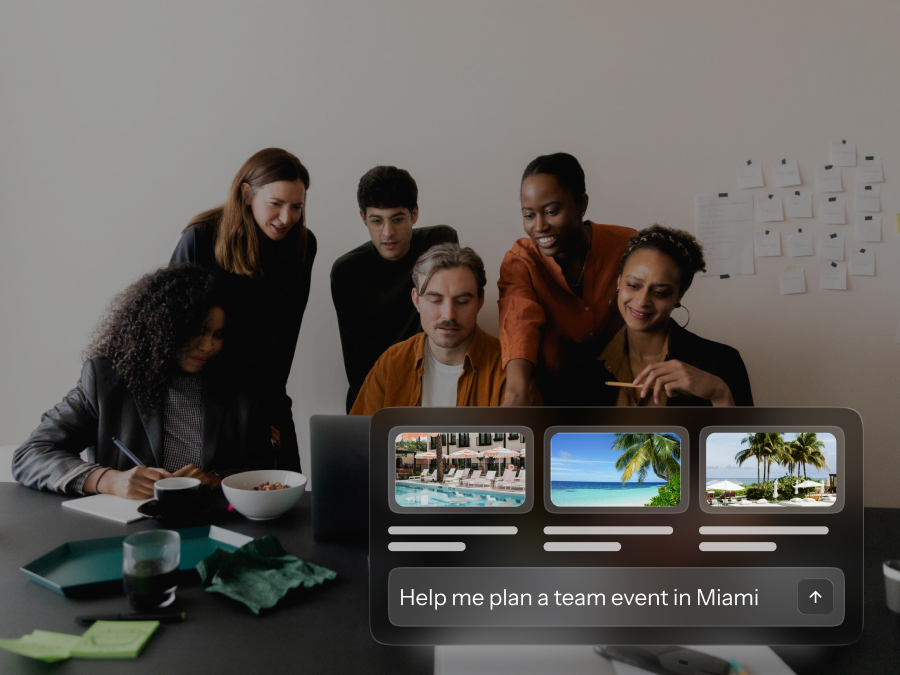
Describe what you're looking for in plain language - event size, location, dates, budget per head, any requirements around activities or accommodations - and BoomPop's AI queries a network of over one million vetted venues and vendors to surface options that actually match. Not a list of 200 results you have to filter manually. Curated options with real pricing, availability, and relevant details included.
From there, RFPs go out automatically. BoomPop tracks responses, follows up on venues that haven't replied, and surfaces the information you need to compare options without having to chase each one individually. The "ghosted by hotels" problem - where venues simply don't respond or take days to acknowledge an inquiry - gets addressed through automated follow-up sequences and a vendor network that BoomPop's in-house event team has built real relationships with.
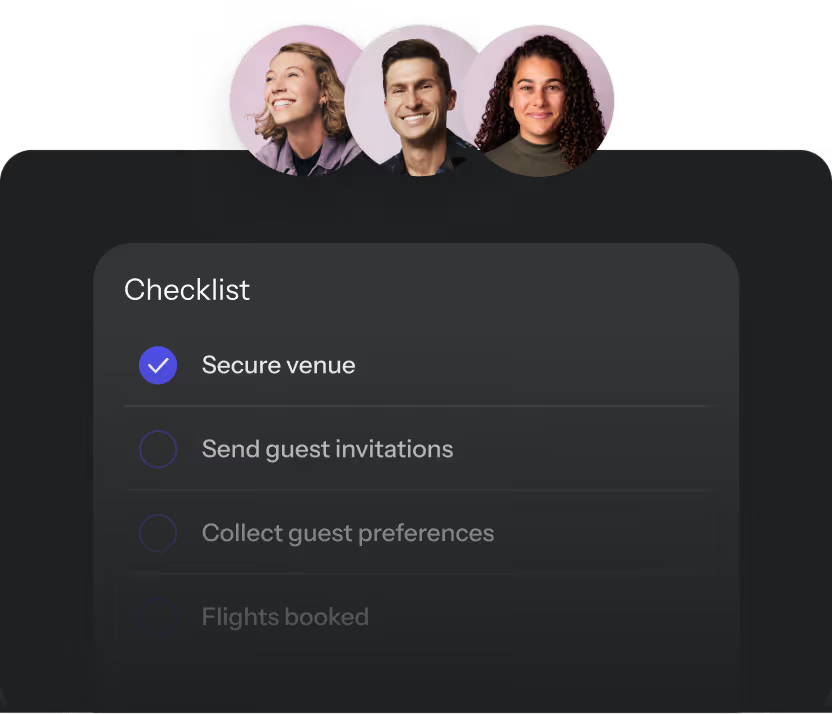
Once a venue is selected, everything else stays in the same platform: contract management, guest communication, dietary preferences and room assignments, budget tracking, and a post-event report that gives finance and leadership the ROI visibility they keep asking for.
For the planner who has been handling venue sourcing through spreadsheets, email threads, and personal vendor relationships, BoomPop changes the workflow materially - not by making the existing process slightly more organized, but by automating the parts that shouldn't require human time in the first place.
Key capabilities:
- AI venue discovery: Natural language input generates curated venue recommendations with real pricing and availability
- Automated RFPs: Submissions go out across multiple venues simultaneously; follow-up is handled automatically
- Negotiation support: BoomPop's network and in-house event pros support contract review and terms negotiation
- Budget dashboard: Live view of costs across all vendors and line items, shareable with finance
- Guest management: Invitations, RSVPs, dietary preferences, and communications handled in one place
- BoomPop Studio: Full-service event planning available for teams that want human support alongside the software
- Proven at scale: Over 60,000 hotel nights booked for clients including Google, Netflix, Dropbox, and Nike
BoomPop reports that clients save 25–40% on event costs and hundreds of hours per event through its platform. It ranked #7 fastest-growing software company on the 2025 Inc. 5000.
Choose BoomPop when you're a corporate planner, EA, or people ops team sourcing venues for company events and need the RFP and negotiation process automated, not just tracked. Avoid it if you're a venue operator looking to manage your own space's bookings and revenue pipeline - that's not what BoomPop is built for.
2. Cvent - best for enterprise organizations sourcing venues at high volume through a structured procurement process
Cvent's Supplier Network is the largest venue sourcing database in the category, with access to over 300,000 hotels and venues worldwide. For enterprise organizations running dozens of events annually, the scale and structure of Cvent's sourcing tools - standardized RFP templates, organized bid comparison, centralized supplier history - are genuinely difficult to replicate elsewhere.
The tradeoff is the same one that appears in every other context where Cvent comes up: it's built for procurement-grade complexity, and it behaves accordingly. The sourcing tools are powerful but navigating them requires training. Pricing reflects enterprise scale. For organizations with a dedicated event or procurement team managing high-volume sourcing, Cvent earns its position. For anyone sourcing venues as a secondary part of their job, the overhead often outweighs the benefit.
Cvent also functions as a two-sided marketplace: venues use Cvent's supplier tools to receive and respond to RFPs, which means Cvent's network has strong depth at the larger hotel and conference center tier, and less coverage in the boutique and independent venue space.
Choose Cvent when you're an enterprise with a dedicated events or procurement team managing structured, high-volume venue sourcing. Avoid it when you need speed, simplicity, or access to the independent and boutique venue market.
3. Tripleseat - best for restaurants, hotels, and unique venues managing private event bookings
Tripleseat is the most widely adopted venue management platform for the hospitality side of this category, trusted by over 19,000 venues globally. It was built specifically for restaurants, hotels, and unique event spaces that handle frequent private event bookings - and it shows in every part of the product.
Lead capture integrates directly into a venue's website. Inquiries flow into a centralized pipeline where the team can track status, send proposals, and convert leads to bookings without leaving the platform. Calendar management prevents double-bookings across multiple spaces. BEO generation, menu building, invoicing, and client communication all live in one place.
The friction points reviewers consistently call out: emails sent through Tripleseat often land in spam, which creates real problems when clients miss proposals and contracts. The mobile experience is less reliable than the desktop. Pricing isn't transparent - you'll need to contact sales.
The 2026 addition of 3D floorplans and ticketing expands Tripleseat's use cases meaningfully, particularly for venues that want to offer ticketed events alongside private bookings.
Choose Tripleseat when you operate a restaurant, hotel, or unique venue and need to manage private event bookings, proposals, BEOs, and client communication at volume. Avoid it if you're planning corporate events and need tools for finding and sourcing venues - Tripleseat is built for the venue, not the planner booking the venue.
4. Perfect Venue - best for independent venues wanting Tripleseat-level functionality at lower cost
Perfect Venue addresses the same problem as Tripleseat - managing private event bookings for restaurants, bars, and independent venues - with a lighter price point and a simpler interface that reviewers consistently describe as easy to get into from day one.
It covers the core workflow: lead management, proposals, contracts, guest communication, and event calendars. It doesn't have the depth of Tripleseat's BEO generation or the breadth of integrations with third-party platforms, but for smaller independent venues that don't need that level of complexity, that's a reasonable tradeoff.
G2 reviewers describe the platform as "a game-changer" for independent restaurant groups and highlight its intuitive design as a meaningful differentiator over more complex tools.
Choose Perfect Venue when you're an independent restaurant or bar managing private events and need a clean, affordable alternative to Tripleseat without the implementation overhead. Avoid it when your venue operations require advanced BEO management, complex multi-space coordination, or integrations with enterprise hospitality systems.
5. Momentus Technologies - best for large venue operators managing multi-space facilities at enterprise scale
Momentus (formerly Ungerboeck) has been in the venue management category for over 35 years, serving stadiums, convention centers, universities, and performing arts facilities. It empowers over a million events annually across more than 57 countries, and its enterprise feature set reflects that depth: multi-space portfolio management, advanced reporting, staff scheduling, equipment tracking, and integrations with financial and facilities systems.
The scope is genuinely different from Tripleseat or Perfect Venue. Momentus isn't optimizing for a restaurant converting private event inquiries - it's managing the full operational complexity of a 50,000-seat arena or a multi-building convention campus, where the number of simultaneous events, staff assignments, and service coordination requirements are orders of magnitude higher.
That depth comes with implementation complexity. Momentus is a platform you configure and implement over months, not days, and it requires dedicated admin support to run well.
Choose Momentus when you operate a large venue - a stadium, convention center, university, or performing arts facility - and need enterprise-grade operations management across multiple spaces and revenue streams. Avoid it when your venue is smaller-scale or your primary need is a fast-to-implement platform for managing private event bookings.
6. Event Temple - best for hotels and venue operators focused on lead conversion and revenue growth
Event Temple is a modern, cloud-based platform built specifically for hotels and venue operators. It positions itself around revenue growth - faster lead response, better proposal conversion, and streamlined booking workflows - rather than pure operational management.
Its interface is clean and intuitive by hospitality software standards, and the integration with hotel property management systems makes it useful for hotels that want event management to connect directly to their broader revenue operations. G2 reviews highlight it as "the tool of the future" for its clean design and straightforward workflow.
The platform is less mature than Tripleseat in terms of BEO depth and ecosystem integrations, but for hotels prioritizing speed-to-booking and a modern user experience over maximum feature breadth, it's a strong option.
Choose Event Temple when you're a hotel or venue operator who wants a clean, modern platform focused on converting leads faster and integrating event bookings with hotel operations. Avoid it when your primary need is detailed BEO management, restaurant-specific workflows, or support for complex multi-space facilities.
7. Planning Pod - best for independent venues and caterers needing deep food and beverage management
Planning Pod offers over 40 integrated tools covering venue booking, floor plans, food and beverage menu management, BEO generation, client communication, and budget tracking. Its depth in F&B operations - menu planning, food item libraries, dietary tracking, service staff coordination - makes it the strongest option for caterers and independent venues where food and beverage is the core of the event product.
The breadth of features is both its strength and its complexity risk. Teams that use the full platform report significant time savings. Teams that need only a subset of the tools sometimes find the interface harder to navigate than more focused alternatives.
Choose Planning Pod when you're an independent venue or catering company where food and beverage management is the operational core and you want all of it in one system. Avoid it when your event type doesn't involve complex F&B coordination - simpler platforms will be faster to implement and easier to use.
What makes venue sourcing so hard - and what software actually fixes
The RFP roulette problem
Sending an RFP to a hotel isn't a form submission. It's the start of a negotiation with a vendor who has every incentive to respond slowly, quote high, and withhold information like F&B minimums, AV fees, and room block attrition clauses until you're too far into the process to walk away easily.
The companies that handle this best - either through scale, relationships, or automated follow-up - extract materially better terms than planners who treat each RFP as a cold inquiry. BoomPop's vendor network and automated RFP tools exist specifically to address this dynamic. Cvent's scale gives enterprise buyers similar leverage through volume. Independent planners going venue by venue through email typically get the worst of both worlds: slower responses and less favorable terms.
The F&B minimum maze
Most planners who haven't negotiated hotel contracts before don't realize how much of the actual cost lives in the food and beverage minimum - the amount you're contractually required to spend on catering, regardless of what your group actually eats and drinks. F&B minimums can easily represent 30–40% of total event cost at full-service hotels, and they're rarely included transparently in the initial quote.
Good venue sourcing software - or a platform with in-house expertise like BoomPop's - helps you ask the right questions before you're locked in, compare apples to apples across venues, and understand what's negotiable versus what isn't.
The "ghosted by hotels" pattern
It's not unusual. Hotels get hundreds of RFPs and prioritize the ones most likely to convert, which means corporate planners without a track record or booking volume relationship get deprioritized. Automated follow-up through a platform like BoomPop changes the dynamic - venues know the inquiry is coming through a managed channel with real bookings behind it, which changes how seriously it gets treated.
How to choose between a venue management tool and a venue sourcing tool
The easiest test: are you the one receiving bookings, or making them?
If you're receiving them - you run the venue, you need to manage leads and convert them to bookings - you want Tripleseat, Perfect Venue, Momentus, or Event Temple depending on your venue type and scale.
If you're making them - you work for a company, you're planning events, you need to find and book venues that work for your group - you want BoomPop or Cvent depending on your event volume and complexity.
The second question for corporate planners specifically: do you need help with the whole event, or just the venue? If venue sourcing is one piece of a larger planning problem that includes guest management, budget tracking, and vendor coordination, a platform like BoomPop that handles the full workflow will save you more time than a sourcing-only tool. If you're running a structured procurement process across hundreds of events and your primary bottleneck is RFP management at enterprise scale, Cvent's sourcing infrastructure makes more sense.
FAQ
What's the difference between venue management software and event management software?
Venue management software - in its traditional sense - is built for venue operators: hotels, restaurants, event spaces, and conference centers that receive event bookings and need to manage their calendar, client communication, proposals, and operations. Event management software is built for event planners who are organizing the event itself. BoomPop sits in the event management category but includes the venue sourcing and booking functionality that most event platforms skip.
How do I send RFPs to multiple venues without spending hours on each one?
BoomPop automates the RFP process end to end: describe your event, get curated venue options, and submit requests simultaneously to your shortlist without building each one from scratch. For enterprise-scale sourcing through Cvent's supplier network, standardized RFP templates let you send structured requests to multiple venues with consistent information requirements. The manual alternative - emailing each venue individually - is the default only because most planners haven't found a better system yet.
What should I actually negotiate in a venue contract?
The line items most planners accept without questioning: F&B minimums (often negotiable, especially for weekday or off-peak events), attrition clauses on room blocks (the penalty if fewer guests book than committed), AV exclusivity (whether you can bring outside AV or must use the hotel's), and complimentary room ratios (one comp room per X paid rooms, typically negotiable upward). BoomPop's platform and Studio team help navigate these terms; Cvent's enterprise tools provide comparison data across similar bookings.
Do I need separate software for venue sourcing and event management?
Not if you choose the right platform. BoomPop handles both - sourcing, booking, and the full event management workflow after the venue is locked - so you're not duct-taping two systems together. The argument for separate tools only holds if your sourcing is at Cvent's enterprise procurement scale and your event management needs are equally complex, in which case Cvent plus a dedicated event platform may make sense.
How far in advance should I start sourcing venues for a corporate event?
For large events (100+ attendees) or popular destinations, 4–6 months minimum. For mid-size offsites in flexible locations, 6–8 weeks is typically enough if you have a platform doing the outreach work in parallel rather than sequentially. The "start early" advice exists because manual sourcing is slow - when RFP submission and follow-up are automated, you can compress the timeline meaningfully.
What does "venue attrition" mean and why does it matter?
Attrition is the contractual commitment to fill a minimum percentage of your reserved room block - typically 80–90% of the rooms you blocked. If your attendees book fewer rooms than the minimum, you owe the hotel a penalty fee for the difference. It's one of the most common sources of unexpected post-event costs for corporate planners, and it's entirely negotiable before you sign.
Start planning in 2 minutes or less

.avif)

.svg)